This is a part of a continuing series of Q&As with members of the brewing community from across the US. Brewer Magazine will share business and personal insights from Brewmasters, Head Brewers, Brewing Managers, Sales Directors, QCQA Managers and others each weekend to help you get to know each other better in the industry and learn more to better develop your own brand.
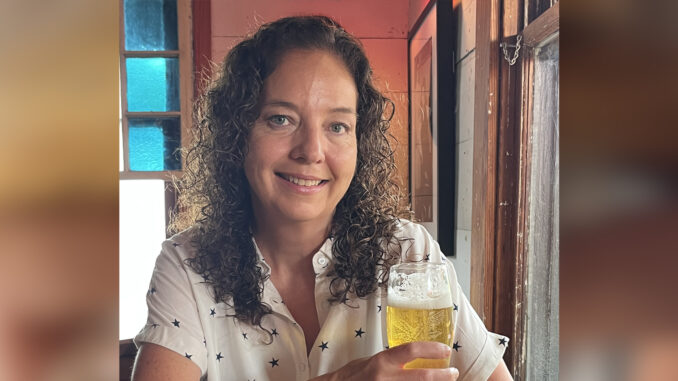
Amy Cartwright, Co-Founder/President, Independence Brewing Company — Austin, Texas
BREWER: Looking at the year ahead, what is one business-forward priority for your brewery, and why does it matter to your long-term success?
CARTWRIGHT: My priority is building an operating model that does not require me to personally administer every part of the business. Independence is leaner now, and my time has become one of the company’s most limited resources. We are automating routine work such as bookkeeping, reporting, and administrative follow-up so I can spend more time in the market with retailers, distributors, accounts, and consumers. That operational discipline also supports one of our most important financial goals for 2026: reducing our long-term liabilities by 45%. Every hour and dollar we save on administrative overhead can be redirected toward debt reduction, sales activity, and rebuilding the brand’s presence in the market. That matters because our next stage of growth will not come from processing more paperwork. It will come from restoring availability, strengthening relationships, and reminding Texans why they connected with these beers in the first place.
BREWER: What is one business decision you made in the past year that had a meaningful impact, and what did you learn from it?
CARTWRIGHT: The most consequential decision was choosing not to replace our brewery with another expensive production facility. We were facing lease renewal rates 21% to 38% higher per square foot than our 2026 lease rate. At the same time, estimates for purchasing land and relocating the brewery started at $3.9 million. Taking on that level of new debt did not make sense in a beer market that already has substantial unused production capacity. Instead, we moved to a contract-production partnership with an experienced Texas brewery. That decision eliminated approximately $1.086 million in annual occupancy expenses, including rent, property taxes and insurance. It allowed us to direct cash toward reducing debt and strengthening the company rather than financing another building. The tradeoff is that contract production requires more precise forecasting, longer planning horizons, and greater discipline around distributor and retailer communication. The larger lesson was that owning tanks and a building is not what makes us a brewery. Our recipes, quality standards, relationships, and connection with our customers are the parts of the business we have to protect.
BREWER: Where are you currently seeing the most opportunities for growth, and how are you approaching them?
CARTWRIGHT: Our biggest opportunity is depth rather than breadth. Consumers enjoy trying new releases, but most brewery volume is still built through beers people know, trust, and buy repeatedly. Before this transition, we supported seven year-round brands along with seasonal releases, representing approximately 36 SKUs. We have now reduced the portfolio to 18 SKUs so we can concentrate our resources behind a smaller group of established beers, led by Stash IPA, Native Texan, Austin Amber, and Convict Hill Stout. Rather than introducing more products right now, we are focused on rebuilding draft placements, building velocity in key retail accounts, and working more closely with our Texas distributors. We are also connecting our digital audience more directly to retail sales. The goal is to help our online followers become retail buyers, while encouraging the folks buying a six-pack at the store to connect with us online and champion the brand. To make that happen, we are updating our online beerfinder to drive direct actions like curbside pickups at local retailers.

BREWER: What operational or financial challenge is currently top of mind, and how are you working to address it?
CARTWRIGHT: Our top-of-mind challenge is protecting margins while maintaining enough cash to rebuild sales and aggressively reduce debt. Moving to contract production eliminated many of our fixed facility expenses, but it did not eliminate our exposure to rising energy, ingredient, packaging, freight, and other production costs. Those increases can still be passed through to us, so we have to keep a sharp eye on the profitability of every SKU and every case we sell. We are addressing that with a highly disciplined budget and a much closer evaluation of promotional spending. That means reducing price promotions that erode margin and moving away from expensive marketing programs that do not generate more in sales than they cost. We still need to invest in rebuilding distribution and consumer demand, but every dollar has to work harder. The balance is critical: preserve enough cash to support sales growth today while reducing high-interest debt so that, over time, more of our capital can move from paying for the past to funding the future.
BREWER: How has your approach to running a brewery evolved over the past few years, and what changes have proven most beneficial?
CARTWRIGHT: My role has evolved from managing a manufacturing facility to leading a focused beer and brand company.
I still care deeply about how the beer is made, but owning and maintaining a large physical brewery had increasingly become a separate business—one centered on repairs, utilities, equipment, and property costs. Too much leadership attention was being absorbed by the building rather than by the beer, the market, and the customer. Separating production from facility ownership forced us to become clearer about what truly creates value. I’m focused on increasing demand, distributor execution, retail availability, cash generation, and the strength of the brand. We are healthier and more focused because we went back to prioritizing the beer and the community over the building.
READ MORE: Nitro Widget Tech Tips from Independence Brewing
BREWER: What industry shift are you paying closest attention to, and how might it influence your decisions moving forward?
CARTWRIGHT: I am closely watching the decline of the traditional regional production-breweries and the emergence of consolidated production ‘hub and spoke’ model. Large-scale production is increasingly being consolidated into shared or partner facilities, while neighborhood taprooms and hospitality spaces serve as the consumer-facing spokes. Many regional breweries can no longer justify carrying the full cost of a large production property, especially as wholesale growth has slowed and occupancy, labor, and equipment costs have increased. That shift reinforces our decision to use contract production to manage volume without taking on another major facility. It also leaves open the possibility of a future Independence taproom designed primarily as a neighborhood gathering place—a smaller customer-facing space that creates a direct connection with our fans and complements the wholesale business rather than carrying the burden of all our production.