For breweries in seasonal markets, a big annual event can be more than a way to put beer in front of a large crowd. Done strategically, it can help concentrate revenue, bring new customers through the door, strengthen a brewery’s identity and create experiences that carry over into the rest of the year.
But getting there takes more than booking a band, bringing in food trucks and putting up a poster.
Twin Oast co-founder Cory Smith has spent years developing the brewery’s approach to three major events — Apricot Fest, Quinstock and Oastoberfest — and the biggest lesson from that experience is that successful events aren’t really seasonal projects. They’re year-round business pieces that happen to culminate on a particular weekend.
“We kind of have, I don’t want to say a full rinse-and-repeat, but we kind of know the schedule of how things are supposed to go,” Smith said in a BREWER Podcast. “If we want to make any changes, we can do that and it’s not that big of a deal.”
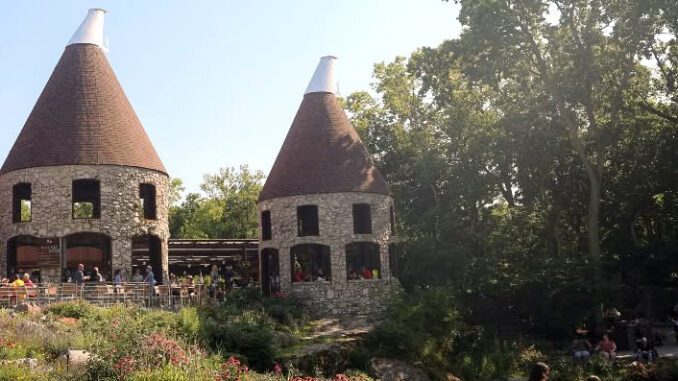
That repeatability is important because it allows the brewery to spend less time reinventing the event and more time improving it. Twin Oast — located in Port Clinton, Ohio (near the popular amusement park Cedar Point) operates in a particularly seasonal market. Smith said about 3,000 people live on Catawba Island year-round, while the Lake Erie Shores and Islands area draws millions of visitors during the summer. The brewery’s business can drop dramatically during the offseason, making its major events an important part of its annual business strategy.
“We realized we’re trying to be a destination brewery. We want all these people to come here,” Smith said. “So, we wanted to capitalize while they’re here to get at least three big days every year.”
That starts with understanding why the event exists in the first place.
Apricot Fest is tied to the region’s agricultural identity and the brewery’s apricot beer. Quinstock grew out of a family party that became an annual tradition. Oastoberfest combines the brewery’s craft beer identity with a Bavarian-style celebration and welcoming in other breweries.
Each event has its own reason for existing, rather than simply being another weekend festival.
For Twin Oast, revenue remains the primary measurement of success because the events operate within a seasonal business model. Smith said the brewery sets attendance goals for each event, but increasing revenue year-over-year is the larger objective. At the same time, Smith doesn’t treat the financial return as the only value.
The brewery views its events as part of a broader “flywheel” in which an event, beer quality, service and distribution reinforce one another. Someone might discover Twin Oast at an event and later recognize the brand when seeing its beer on a retail shelf. Conversely, someone who discovers the beer through distribution might decide to visit the brewery.
“Having great events, having a good product, having good service, being able to see us out in distribution should all feed each other,” Smith said.
That makes an event potentially valuable even when it doesn’t hit every financial target.
“If we don’t hit our revenue targets or whatever, if we get new people here and give them a great experience, that’s a huge win,” Smith said.
Revenue, attendance, new customers, social engagement, beer sales, email signups or subsequent visits can all serve a purpose, but a brewery needs to know what it’s trying to accomplish before deciding what success looks like. Just as important is recognizing that not every event needs to target the same customer.
Twin Oast deliberately differentiates its three major events. Apricot Fest is family-focused, with activities and vendors geared toward parents and children. Quinstock is positioned more as a large party with a stronger 21-and-over emphasis while Oastoberfest is more beer-centric, attracting customers interested in craft beer That differentiation gives each event a reason to exist independently and allows the brewery to market the experience rather than simply advertising another date on the calendar. It also means a brewery doesn’t have to chase the exact same audience every time it puts on a large event.

The marketing strategy can then follow the purpose of the event.
Smith said social media accounts for the vast majority of Twin Oast’s event promotion. The brewery creates Facebook events and works with participating vendors and partners so those organizations can promote the event to their own audiences.
But the brewery also markets to people who are already on-site.
Table toppers, posters and prominent signage introduce visitors to upcoming events while they’re already experiencing the brewery.
“We really try to put ourselves in the customer’s shoes and walk through every single aspect from the time I arrive to the time I leave,” Smith said, explaining that they do a customer walkthrough about a month before each festival. The team asks basic questions that can expose problems before customers encounter them: Where do I enter? Where do I go? Which entrance do I use? Where do I buy a beer? How does the payment system work? What happens after I arrive?
Smith said the brewery also learned to think through the event from the perspective of vendors. Power, water and ice requirements need to be identified ahead of time so vendors can be placed where the necessary infrastructure is available. Those details aren’t particularly exciting parts of event planning, but they’re precisely the kinds of details that can determine whether a large event feels organized or chaotic.
“There’ll always be a hiccup,” Smith said. “Something will always bite you in the ass, but whatever you can do to minimize that is going to make for a much smoother day.”
Smith said the brewery has two primary people overseeing the festivals. One staff member works on the larger festival blueprint throughout the year, while another handles much of the day-to-day execution. The broader staff is brought into the planning process months before each event so everyone understands the plan. That division of responsibilities becomes particularly important when events are compressed into a short seasonal window.
Twin Oast has three major events within roughly four months, meaning the brewery can’t afford to finish one event before starting the next. Bands and vendors need to be booked months ahead, and planning for the following year’s Apricot Fest begins while the current year’s season is still underway.
READ MORE: The Beer Tourism Planning Going on Around the Country
That becomes easier when the event itself has a recognizable structure. Food trucks have established locations. Bands know where they perform. Staff understand the general flow. Vendors know what information they need to provide. Customers encounter a process that’s been tested in previous years. That doesn’t mean the event should remain unchanged.
Any brewery can learn from this as Twin Oast has established a recognizable foundation, a measure of what happened, then make targeted improvements instead of feeling obligated to create an entirely new experience every year.
Ultimately, the Twin Oast approach suggests that a marquee brewery event works best when it’s treated less like a party and more like a product. It needs a purpose with an audience and financial goals with an operational plan. And it needs enough consistency that customers know what they’re coming back for while still giving the brewery room to improve it.
Most importantly, the experience has to work from the customer’s perspective.