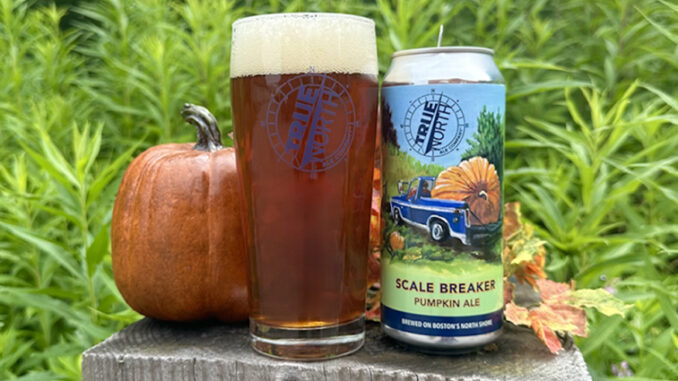
True North Ale Company‘s recent selection to supply its Scale Breaker Pumpkin Ale through Sweden’s state-owned alcohol retailer isn’t just about a smaller US-based brewery having the ability to export beer. For founder and Chief of Business Operations Gary Rogers, it’s a case study in how relationships, patience and realistic expectations around margins can position an American brewery for long-term international growth.
The opportunity traces back several years before Scale Breaker ever entered Sweden’s competitive purchasing process. In 2023, True North participated in the Brewers Association’s Export Development Program, sending beer to a trade show in Italy where a Swedish distributor discovered the brewery.
“The BA EDP was instrumental in our brand gaining recognition in Europe based on our participation in the trade show in Italy where the Swedish distributor discovered us,” Rogers said. “I recommend other breweries consider participation in EDP if they believe their beers would be appealing to a specific market or if they wish to ‘go fishing’ to find a distributor to represent them and develop a market for them.”
That relationship eventually introduced True North to Sweden’s unique retail system. Unlike many export markets, beer sold through retail channels in Sweden flows through Systembolaget, the country’s state-owned alcohol retailer, which regularly issues tenders outlining specific beer styles, purchase volumes and pricing expectations.
“Winning business through Systembolaget means exposure to all retail outlets in the country,” Rogers said.
Rather than pitching whichever beer they hoped to export, Rogers said the brewery evaluates each tender individually.
“Throughout the year, Systembolaget sends tenders, or invitations to bid, on specific opportunities,” he said. “A beer style will be specified, the number of cases they will commit to purchase, and the price they will pay. We then decide if we wish to pursue that beer style and, working with our Swedish importer/distributor, determine how to meet the cost requirement.”
For True North, the winning opportunity came when Systembolaget requested a pumpkin beer for the 2026 fall season. The brewery submitted a sample of Scale Breaker Pumpkin Ale from its 2025 seasonal production and secured the contract.
While export business can sound glamorous, Rogers emphasized that breweries need to understand the financial realities before chasing international sales.
“If we believe we can compete with a great beer and can live with the slim margins, we apply,” he said.
Those margin pressures largely come from the economics required to compete in overseas retail.
“The price paid by Systembolaget has to result in the imported beer being competitive on their retail store shelves,” Rogers said. “Shipping costs are a factor that reduces margins for all parties. If we can leverage this win and establish brand awareness in the market, we will be more likely to win additional business at higher margins outside the very competitive tender process.”

That long-term thinking is what makes the opportunity attractive. Rogers said success isn’t defined solely by the initial order, but by whether it creates future distribution opportunities.
Based on strong market performance, Scale Breaker could return to Systembolaget next year without having to compete through another tender, while also creating opportunities for additional True North brands to enter the retailer’s approximately 500 stores. Beyond retail, Rogers sees bars and restaurants in Sweden as another avenue to build sales through the brewery’s distributor.
He also views Sweden as a launching point rather than the destination.
“Our distributor will be able to leverage our success in Sweden to those other nearby nations,” Rogers said, noting that neighboring Nordic countries don’t operate under the same state-controlled retail model. “We would certainly leverage our success in Sweden to pursue other international opportunities through the Export Development Program.”
For breweries considering export, Rogers believes production scale may be less of a barrier than many assume. The initial order represented roughly one additional 60-barrel batch — less than 2% of True North’s annual production — and fit comfortably into the brewery’s existing seasonal schedule. Instead, he believes understanding export logistics and selecting opportunities strategically are the bigger challenges.
READ MORE: How Fresh Hop Season Can Now Be More Flexible
Systembolaget’s tenders dictate which beer styles breweries can pursue, meaning breweries must match opportunities with beers they’ve already proven successful in their home markets. As new tenders are released, Rogers said True North evaluates each one individually, including a current opportunity for a Rye IPA.
“I believe the opportunity to share great beer made in America with beer aficionados around the world is a worthy pursuit,” Rogers said. “But for US craft breweries to successfully pursue those opportunities, they’d have to understand the nuances of the export business and the margin pressures they’d have to endure.”
For True North, exporting Scale Breaker isn’t the finish line. It’s the first step toward establishing a recognizable brand in an international market which is one relationship, one tender and one shipment at a time.