An event space can offer something that traditional marketing and distribution can’t always deliver to a brewery: an opportunity to introduce the brand to an entirely new audience.
At Urban Artifact in Cincinnati, that idea has been part of the business from the beginning. What started with a vision built around music and beer has grown into a collection of experiences that includes a music venue, weddings, a recording studio, a record label and even a radio station. For co-founder Scott Hand, those pieces aren’t necessarily about generating another revenue stream. They’re about creating reasons for people to discover the brewery.
“Our initial business plan was music and beer,” Hand said during the recent cover story interview with the fruit-forward beer makers. “Our very first T-shirts said music and beer, and the music venue was a huge part of our startup here in this facility and in the neighborhood that this business lives in as its home.”
Hand said the brewery’s location in a converted church in Cincinnati’s Northside neighborhood has helped establish a home base for the business, even as its products have reached markets across the country. While the building’s history and character are meaningful to the brewery, Hand learned that the same story doesn’t necessarily carry the same weight with every customer.
“We spent a long time, years, putting pictures of the church and talking about how that was a part,” he said. “People buying this (on the other side of Cincinnati) don’t care about that. So it doesn’t matter outside, but it does matter to us.”
A brewery’s physical identity can be a significant part of its local appeal and branding without needing to become the central selling point in every market.
For a brewery, the goal should be understanding what makes its property interesting and using that distinction to create experiences people want to seek out. An old industrial building, historic church and rectory, outdoor courtyard or unusual architectural feature can provide something that a typical taproom can’t easily replicate. But the experience also needs to connect to the business.
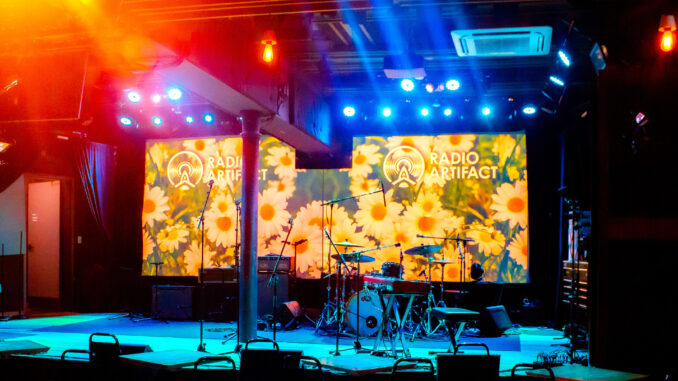
Hand said the music venue and wedding business have been particularly effective at bringing new people into Urban Artifact.
“We just had a show last Friday that brought in 200 people. Maybe 50 of them had been here before, so that’s 150 new people in the taproom trying our stuff on a Friday evening,” he said.
Weddings offer a similar opportunity, often introducing the brewery to an even larger network of potential customers.
Not everyone attending those events will become a regular customer, and not everyone will even drink the brewery’s products. But the exposure creates familiarity that can have value long after the event ends.
“Usually, you get a wedding in here for 150 people. Only the bride and groom were the only ones who had ever been here before,” Hand said. “So their entire extended families are all here. They had that experience and walk away knowing, hey, this was cool. I’m gonna remember that name when they see us on the store shelves later.”
For breweries considering an event strategy, that’s a useful way to measure success. Rather than looking exclusively at ticket sales, rental fees or food and beverage minimums, consider how many first-time visitors an event introduces to the brand. That doesn’t mean every event needs to become a marketing campaign. It does mean the brewery should make it easy for guests to discover the taproom, understand what the business offers and have a positive experience that extends beyond the event itself.
There’s also a difference between creating an attraction and creating a sustainable business operation. Urban Artifact’s event offerings have been relatively steady, Hand said, but the pandemic forced the brewery to redirect attention toward its external distribution business for an extended period.

“It would be nice if the last few years had been kinder and allowed us to invest in them more,” he said. “The pandemic really hurt all of that on-site stuff and made us really have to focus externally for a long time.”
With distribution in a better position, Hand said the brewery is looking toward renewed investment in its taproom and kitchen.
Urban Artifact has also taken its music identity beyond hosting performances. Its Radio Artifact operation uses a partnership with Cincinnati’s local NPR affiliate, WBXU, to broadcast on an HD2 channel and streaming platforms. The brewery’s back area of the taproom in the basement of the former church also functions as a live recording space, allowing performances to become part of its programming.
Hand acknowledged that the radio operation isn’t a financial contributor.
“It makes zero sense. It makes zero money. There’s no reason to do it other than I actually really want to do it,” he said.
Still, the radio station connects several parts of the brewery’s identity, including its venue, recording capabilities and regional music focus. The brewery can record live performances, feature regional artists and extend the experience beyond the people physically attending a show.
“It’s kind of about branding, but it’s not really,” Hand said. “It’s just another piece of the puzzle of what we want to do.”
That approach won’t make sense for every brewery, nor should it. An attraction that doesn’t generate direct revenue needs to have a clear purpose and fit within the company’s financial realities. The larger lesson is that breweries don’t necessarily need to turn every interesting idea into a profit center. Some experiences can strengthen a business by creating community connections, differentiating the property or giving customers another reason to return. The key is understanding the difference between an attraction that supports the overall business and one that simply consumes resources.
For Urban Artifact, music and beer were never intended to operate independently. The venue, weddings and other creative ventures have helped introduce people to the brewery in ways that traditional sales and marketing efforts might not accomplish on their own.
Your opportunity may look different. It could be a rentable private room, a seasonal outdoor venue, a recurring community event or a unique feature of the property that becomes part of the customer experience. The best additions aren’t necessarily the biggest or most elaborate. They’re the ones that give people a reason to visit, introduce them to the brand and create an experience worth remembering.