Operational shifts inside your cidery’s taproom often come from necessity. Whether that’s changing consumer expectations, adapting to fix a bottleneck, or even unexpected setbacks. For a few speakers at CiderCon 2026, those changes have led to improved guest experiences, stronger revenue streams and, at times, valuable lessons about what not to do.
At Bauman’s Cider, a collaboration that began as a small food partnership evolved into a full-scale operational pivot that reshaped the taproom’s identity and financial performance.
Chris Leimena, general manager of Bauman’s Cider on Oak, said the concept initially centered around snack-driven offerings designed to complement cider. That changed when pizza pop-ups began drawing significant attention.
“They got really popular, and people started writing about them,” Leimena said. “Then it became that people were coming in for pizza, but we don’t do pizza… and pizza and cider is kind of conflicting, since so many cider drinkers are gluten free.”
Despite those concerns, customer demand ultimately guided the decision. The team tested weekly pizza nights, which quickly became their busiest day, before committing fully to the concept.
“We finally said, you know what, let’s just do pizza. Now we are a pizza restaurant,” Leimena said. “It’s been great because the pizza is good and it gets people to eat and drink together.”
The move also delivered a financial benefit the team hadn’t anticipated.
“We can charge more for it than the food we were offering before,” Leimena said. “We’ll have days that feel slower… but the sales are exponentially higher… and that kind of trickles down to the staff too… now your staff is making a little bit more.”
Leimena said the experience reinforced a lesson many face when evolving their concept that price increases and operational changes can feel risky, but when aligned with guest demand, they often improve both the guest experience and staff morale.
While Bauman’s leaned into food-driven partnerships, South Hill Cider focused on operational infrastructure to improve guest flow and increase capacity.
Shaunessy Bordas, general manager of South Hill Cider, said small adjustments to service layout significantly improved throughput and revenue.
“I’m a big infrastructure guy,” Bordas said. “We wanted to increase our capacity in terms of how many orders we can take at one time, and how many people we can have here at one time.”
One simple change — relocating the point-of-sale systems — helped remove bottlenecks.
“Taking the POSes off of the front bar and putting them on the back bar… instead of having a funnel to two different POS systems, you had an open bar,” Bordas said. “You have four staff members instead of two… and in the sales, you can see a direct effect.”
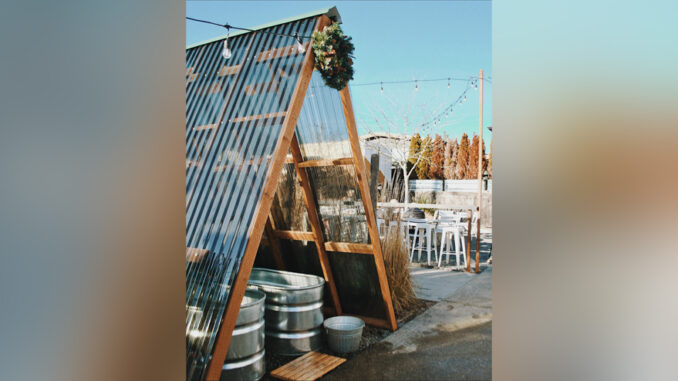
For Yonder Cider, an operational improvement came from an unexpected setback. After a large wedding tent collapsed during installation, founder Caitlin Braam said the team had to quickly rethink how to utilize outdoor space.
“My husband and I built those A-frames over a week… and honestly, they’re the best thing we’ve ever done for outdoor space,” Braam said.
The new structures transformed the taproom’s outdoor usability, extending the season and enhancing the guest experience.

“Now that outdoor space is used almost completely year round,” Braam said. “People will sit out there in the rain… we put heaters in them… they’re very Instagramable as well.”
Braam said the experience highlighted how operational disruptions can spark innovation that improves long-term performance.
“Sometimes it’s these instances that you’re like, ‘Oh no, what are we going to do?’ that forces you to think more creatively,” she said.
Not every change has worked as planned, however. The trio noted that some ideas that seemed promising ultimately failed to resonate with customers.
Braam admitted she initially resisted slushies at Yonder, a decision she later reversed after seeing both operational and financial benefits.
“I was completely anti-slushy, like, hardcore anti-slushy,” Braam said. “Once we installed the slushy machine, it was night and day… it brings in a lot of money.”
She added that slushies also provided a practical way to manage inventory.
“We had cans of short fills… things that were a little less seasonal… and it’s a really great way to make lemonade out of lemons,” Braam said.
Leimena shared a similar experience at Bauman’s.
READ MORE: Making a Cidery Tasting Room Your Own Space
“I also was anti-slushy,” Leimena said. “But it is our best selling item, and we charge more for it than anything else.”
The team also found opportunities to innovate within the format.
“We always offer two slushies… like right now we have an Aperol Spritz slushy,” Leimena said. “People find that a nice little way to get a cocktail.”
While some additions drove success, over-programming proved to be a challenge for Bauman’s. Leimena said an early push toward frequent events and rotating offerings created confusion for guests.
“We kind of over-programmed in the beginning,” Leimena said. “People were scared to come because maybe we’re closed for an event… or we only do pizza this (certain) day.”
The team ultimately shifted toward consistency.
“People want to know they can come on a day and get the thing they’re expected to get,” he said.
South Hill faced a similar lesson when attempting to boost winter traffic with themed events.
“I really wanted to throw dance parties in the wintertime,” Bordas said. “I thought we would pack it in… nobody showed up.”
Despite promotion and a local following for the DJ, the event failed to gain traction.
“We did all the same things… but it just didn’t work,” Bordas said. “We had to abandon that.”
Collectively, these experiences underscore a broader operational lesson for cidery taprooms: success often comes from balancing experimentation with consistency, and being willing to pivot when customer behavior dictates a different path. Even when the path forward begins with a setback.