
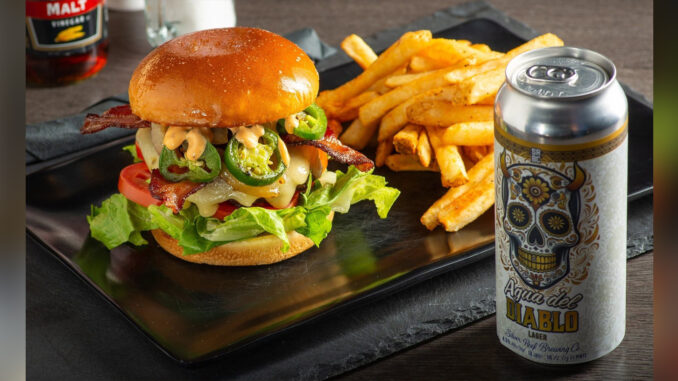
When evaluating whether to invest in a kitchen, the conversation often begins with increasing revenue. But those with breweries that have managed food programs say the more important question may be whether food changes customer behavior. A well-executed menu doesn’t simply generate another profit center. It can extend visits, strengthen loyalty and reduce the number of guests who leave for another destination after finishing a beer.
That distinction matters in an increasingly competitive taproom environment. As breweries compete not only with one another but with restaurants, bars and entertainment venues for consumers’ potentially more limited discretionary spending, some say food has become less of an add-on and more of a strategic tool for customer retention.
“Beer and food are really both social,” said Mike Key, director of operations for Silver Reef Brewing in Southern Utah. He argues that breweries have always succeeded by creating gathering places rather than simply selling beverages. Adding a quality food program reinforces that role by giving customers another reason to stay instead of moving on to the next stop.
“When you go into a brewery that doesn’t have food, you have a few and then, ‘OK, where are we going next? Because I’m going to need to eat,'” Key said. “But when you have a place where you can share items, appetizers and that kind of stuff, people stay longer.”
Longer visits often create secondary business benefits that aren’t immediately reflected on a food sales report. More time in the taproom can mean another round of beer, additional purchases from accompanying guests and stronger emotional connections with the brand. It also gives breweries an opportunity to become the evening’s destination instead of simply one stop on a itinerary.
For Key, that makes food both an acquisition and retention strategy.
“It encourages repeat customers, and it also prevents the churn,” he said. “The two together kind of work in symbiosis.”
The lesson, however, isn’t simply to add food.
Many consistently stress that mediocre food can undermine even an outstanding beer program. Customers increasingly judge the entire experience rather than evaluating the brewery and kitchen separately.
“You can’t have a really good brewery with bad food,” Key said. “I’ve been to really good breweries and not gone back because the food is not good.”
George X. Peterson, president and founder of Central Coast Brewing, takes an equally direct view of operational standards.
“Great food, great beer, great atmosphere — win,” Peterson said. “Have one that doesn’t quite meet your standards, fix it and fix it quickly. Can’t fix, outsource or find a different career.”

Peterson’s thoughts highlight a reality many breweries face as labor costs and complexity continue to rise. Running a kitchen requires a different skill set than brewing beer. If you can’t consistently execute both, maintaining quality may mean partnering with an outside food provider or reevaluating whether an in-house kitchen is the right business model.
That emphasis on execution may be more important than the specific menu itself. Customers rarely separate disappointing food from the brewery’s overall brand. A poor dining experience becomes a poor brewery experience, regardless of how strong the beer may be.
Kat Hess, head brewer at Wynkoop Brewing, sees food as an extension of the brewery’s hospitality strategy rather than simply another revenue stream.
“Food is essential when it comes to creating repeat customers,” Hess said. “If you have a strong food program, especially one that works hand in hand with the beer program, you build loyalty. People want to come back and bring their friends and family with them.”
That alignment between kitchen and brewhouse creates opportunities beyond simply serving meals. Pairings, seasonal menu collaborations and dishes designed to complement specific beers can strengthen a brewery’s identity while giving guests new reasons to return. Hess also points to another business consideration that often receives less attention.
“Food also plays an important role in helping prevent overconsumption of alcohol,” she said, noting that the issue is especially important in Colorado, where higher altitude can intensify alcohol’s effects.
READ MORE: Creating a Welcoming Brewpub Atmosphere
Responsible consumption has become part of the overall customer experience for many breweries. Encouraging guests to eat while they drink can support safer consumption, improve guest satisfaction and reinforce the brewery’s reputation as a place designed for extended social gatherings rather than rapid alcohol sales.
Breweries may benefit from evaluating food with a broader set of performance metrics than kitchen profitability alone. Average length of stay, repeat visitation, group size and overall guest satisfaction may reveal more about a food program’s value than food sales in isolation. The question isn’t whether a kitchen sells enough meals, the better question may be whether the food program strengthens the overall taproom experience enough that customers decide not to leave, and choose to come back again.


1 Trackback / Pingback
Comments are closed.