When breweries introduce something unfamiliar, the instinct is often to soften the message, avoid controversy or market around potential objections. California’s Devil’s Canyon took the opposite approach.
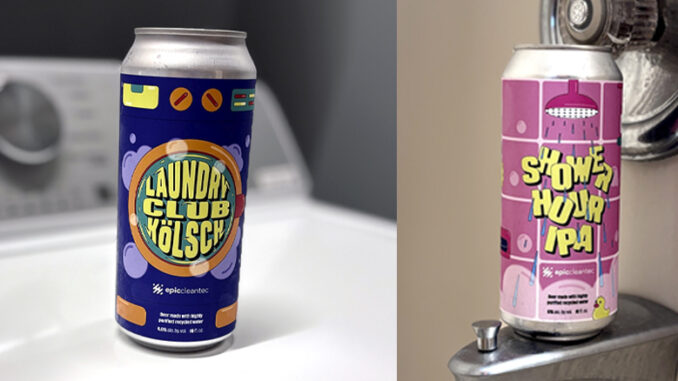
Its collaboration with water recycling company Epic Cleantec centered around producing commercial beers brewed with highly purified recycled shower and laundry water, an idea that can predictably generate headlines. Yet behind the novelty of the releases Shower Hour IPA & Laundry Club Kolsch was an exercise in consumer trust, strategic partnerships and preparing for resource challenges that breweries could eventually face.
For Devil’s Canyon founder and CEO Chris Garrett, the project stopped being a publicity opportunity almost as soon as conversations began.
“When Epic Cleantec first approached us several years ago, we were definitely surprised,” Garrett said. “Like a lot of people, we made a few initial jokes. But that phase didn’t last very long.”
Instead, Garrett said the discussion quickly shifted toward something more meaningful.
“The more we thought about the science, the technology, and the world, the more we realized this wasn’t a novelty, it was a glimpse into the future,” he said. “Water scarcity is becoming a reality across California and around the world. As brewers, water is our most important ingredient, so we have a responsibility to think seriously about how we use it.”
Rather than accepting claims at face value, Devil’s Canyon evaluated the water independently and conducted their own testing and Garrett said said they found that the purified recycled water was actually cleaner than many conventional water sources. That willingness to validate a partner’s claims before attaching a brewery’s reputation showcases a lesson that extends beyond sustainability projects.
Breweries frequently partner with technology companies, ingredient suppliers and nonprofit organizations. The credibility of those partnerships often depends less on marketing than on confidence in doing what they set out to do.
Epic Cleantec approached the collaboration with a different business challenge. Aaron Tartakovsky, the company’s co-founder and CEO, said the goal was never simply to launch a beer.
“The Epic Cleantec team formulated the idea to launch a first-of-its-kind commercial beer to spark a cultural reset around recycled water,” he said.
Water recycling technologies have existed for decades, Tartakovsky noted, but the public rarely thinks about wastewater because it remains largely invisible in everyday life.
“Our goal was simple: build awareness, normalize recycled water, and show that people can trust and embrace it,” he said. “Beer gave us a fun, approachable way to start a conversation about water reuse and make an abstract concept about water, our most precious resource, feel tangible and relatable.”
That strategy offers that customers often connect with experiences more readily than technical explanations. Rather than asking consumers to understand a complicated process first, the collaboration invited them to taste the outcome. Both companies said transparency ultimately proved more valuable than carefully managing perception.
“One of the biggest lessons was that consumers are far more open-minded than people often give them credit for,” Garrett said.
He said most conversations followed a predictable pattern.
“They’ll ask a few questions, maybe make a joke, and then they’ll try the beer. More often than not, the response is, ‘Wow, that’s actually really good,'” he said.
Garrett believes that happened because the brewery never attempted to disguise the concept.
“Transparency is the key,” he said. “We never tried to hide what the product was.”
Instead, the branding deliberately referenced showers and laundry.
“When you are transparent about the process, explain the science, and allow people to make their own decisions, trust follows,” Garrett said.
What surprised Tartakovsky and the Epic Cleantec team most was how quickly skepticism disappears once they talk with people about our meticulous treatment and purification process, he said.

The company intentionally resisted using softer language to describe recycled water.
“We weren’t interested in softening the story or hiding behind euphemisms,” Tartakovsky said. “We wanted to be forthright and confident about it.”
That approach raises an interesting marketing question. New ingredients, alternative packaging formats and sustainability initiatives are often introduced cautiously to avoid customer pushback. Devil’s Canyon’s experience suggests that clearly explaining an unfamiliar idea may generate more confidence than attempting to minimize it.
The collaboration also changed how Garrett views sustainability inside his own brewery.
“Sustainability has always been a core value at Devil’s Canyon,” he said. “What this collaboration did was expand the conversation.”
Garrett noted that brewing commonly requires 5-10 gallons of water to produce one gallon of beer, making water stewardship increasingly relevant for the industry.
“The project also helped us recognize that sustainability isn’t just about improving our own operations,” he said. “It’s about helping consumers understand larger resource challenges and demonstrating practical solutions.”
Perhaps the most unexpected outcome, he added, was how the beer created opportunities to discuss environmental efforts the brewery had already been making for years.
“This project gave people a reason to engage with those efforts and learn more about the work happening behind the scenes,” Garrett said.
The experience has also influenced future planning, with Devil’s Canyon now exploring opportunities to implement water recycling technology on-site. The collaboration’s broader success also demonstrated that unconventional partnerships can produce value beyond traditional marketing.
“What made this collaboration successful wasn’t just the beer,” Garrett said. “It was the combination of Epic’s scientific expertise, our brewing experience, a shared commitment to sustainability, and a willingness to engage the community in an honest conversation.”
READ MORE: Ways To Get Started With Sustainability Self Reporting
His advice to breweries considering similar collaborations was straightforward.
“Do it,” Garrett said. “Not because it’s good marketing, but because many of these challenges are going to affect our industry whether we’re ready or not.”
Epic Cleantec believes the measurable response reinforces that message. Since launching in late 2025, the beers have sold more than 23,000 cans across more than 100 retail locations in 12 states and Washington, D.C., while also appearing at major public events like the Super Bowl and generating interest beyond the brewing industry. Tartakovsky said those outcomes suggest people are willing to embrace sustainable products when they’re presented in ways that feel approachable rather than theoretical.
“The biggest lesson is to make sustainability tangible and not shy away from being bold,” he said. “People connect with experiences more than corporate messaging.”
Whether recycled water ultimately becomes commonplace in brewing remains to be seen. But the collaboration offers a reminder that innovation alone rarely changes minds. Transparency, trusted partnerships and a willingness to educate customers may be just as important as the technology itself.