This is a part of a continuing series of Q&As with members of the brewing community from across the US. Brewer Magazine will share business and personal insights from Brewmasters, Head Brewers, Brewing Managers, Sales Directors, QCQA Managers and others each weekend to help you get to know each other better in the industry and learn more to better develop your own brand.
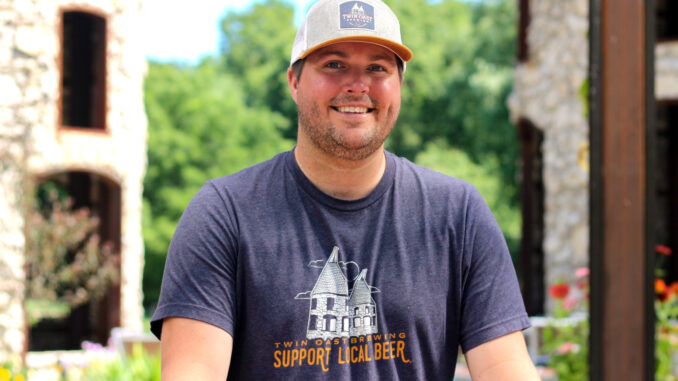
Cory Smith, co-founder, Twin Oast Brewing — Port Clinton, Ohio
BREWER: What inspired you to start your brewery, and how has your original vision evolved over time?
SMITH: Like many brewery owners, my love of home brewing was what really sparked my desire to start a brewery, but the idea of Twin Oast is a joint dream. Personally, I was just happy to enter the beer industry by any means necessary, but my family rallied behind my dream, and together we decided that having the brewery be a destination was going to be the best route. For us, showcasing the 60-acre farm was the best way to not only have a sense of place within our brews, but also have an amazing atmosphere for people to visit. In terms of our overall vision of the brewery, we haven’t strayed too far from the original plan, we’ve just made adjustments. For example, our beer offerings in my original vision, were much more esoteric. I thought our beers would look more like Jester King, Scratch Brewing, or Hill Farmstead than they do now. A mix of practicality and demand caused us to pivot a touch. While we offer beers like Queen D, a blueberry hibiscus wheat, those are more likely to be outsold by beers like Birdie, an American Light Lager. That being said, we’re still honing in on our farm-to-fermenter vision through our new sour projects. For example, we have a mixed culture Saison that is aging in white wine barrels with Quinstock Farms stone fruits. I’m very excited to see how that turns out as that fits the Year 1 vision I had for Twin Oast.
BREWER: What has been your most successful strategy for navigating challenges like rising ingredient costs or economic downturns?
SMITH: We have done a lot of vendor shopping to try to save every penny we can as costs rise. We’ve been a part of the IBA, which helps get some group discounts on certain items, and we’ve really taken a hard look at the landed cost of everything we are quoting before we buy. We’re also in the phase of adding a silo. While this isn’t a cheap upgrade, it will dramatically reduce costs for us as we grow. In terms of on-site, we are trying very hard to not pass every increase to the customers. So we’ve decided to make some of our offerings as draft-only when they were previously offered in cans and in draft. For example, Two Legit Double IPA was always something we’ve offered in 4 packs, but this year we decided it just doesn’t make financial sense, so we’re going to try to make that money back over the bar. Along those lines, with certain beers, we’ve also decided to sell 1/6th barrels only in distribution. The price break for a half barrel is too much for a beer that is very expensive, so if we can keep our sixtel price competitive, we can still sell volume and make profit.

BREWER: In the face of an evolving craft beer landscape, what significant changes have you noticed, and how has your brewery adapted to remain relevant?
SMITH: The craft beer landscape is dramatically different from when we were building to now. In 2018 when we first opened, you would still have people line up all across the country for new beers — that is a rarity at this point. Luckily, we had the thought from Day 1 that it wasn’t just beer people were coming to us for, it was also about the on-site experience. We have always believed that we weren’t just competing with other breweries, we are competing with all forms of entertainment. We have to give people a reason to want to alter their plans to join us for the day. That has led us to look at things like adding new taproom-exclusive beers and experience-driven events. For example, we hosted our first ever Hoppy Halloween last year which was a fall-centric event featuring pumpkin painting, hay rides, fresh doughnuts, and mulled cider. It was a family event that helped drive in people during a normally very slow time for us.
WATCH MORE: Brewer Mag Podcast with Twin Oast
BREWER: What are you sippin’ on right now from your brewery that you really enjoy?
SMITH: Our current variation of Vivod is hitting the spot. Vivod is a base Berliner Weisse, and we add different fruit additions based on the season. Will, our head brewer, decided to make a peach variant that tastes like a peach gummy candy in all the right ways.
BREWER: What trends in the craft beer industry do you think are worth investing in over the next few years?
SMITH: One trend I believe is worth investing in is low-ABV and NA beers. Health consciousness is at the forefront of consumer decision-making right now, and beer often gets sidelined in favor of RTDs or other beverages that are perceived as healthier. I think craft breweries that can create highly flavorful, low-calorie, low-ABV, or NA options have a real opportunity.