A truckload of malt arriving at a brewery rarely sparks concern beyond checking the invoice and the malt COA, but friability is one quality metric that can quietly influence brewhouse efficiency, lautering performance and ultimately beer consistency.
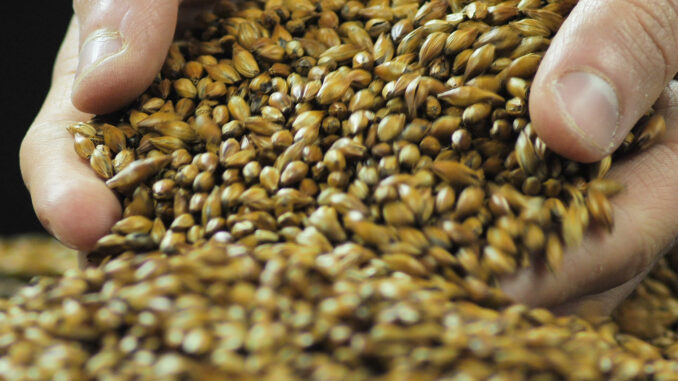
Friability is simply a measure of how easily malted barley breaks apart during milling. It gives brewers an idea of how well the grain was modified during malting and how easily they’ll be able to get sugars out of it in the brewhouse. High friability (typically above 80-90%) means the malt is well-modified, softer and easier to crush, which usually helps brewers achieve better extract efficiency. Lower friability means the kernels are harder or more “glassy,” which can make them more difficult to mill and may reduce how much sugar you can pull from the grain.
For Erik Luli of Immigrant Son Brewery, it’s an area that deserves more attention from brewery owners and production staff. It’s especially more important now as ingredient costs and efficiency targets continue to tighten.
Luli, who spoke on this at the 2026 Ohio Craft Brewers Conference, says friability becomes most relevant when paired with moisture levels and milling performance, and it’s often overlooked until efficiency begins to slip.
“If you’re to keep an eye on your moisture level with friability too, you want to dress your mill so that you’re getting a good crush,” Luli said. “But if your malt has too high of moisture, then it’s going to bend in your mill and not crush, or it’s going to just flatten … and you’re not going to get a full extract out of that kernel.”
For breweries operating on thin margins, even small extract losses can compound quickly. Luli notes that malt handling before milling also plays a role in protecting friability, something that can be easily overlooked in busy production environments.
“First thing you can do is move your malt gently,” he said. “I’ve never seen any brewers tossing bags of grain back and forth to each other … but just don’t toss bags on the ground. It’s going to crush before you crush it the way you want to do it.”
While brewers often focus on brewhouse processes, Luli emphasizes that ingredient handling upstream can affect outcomes just as much. He notes that gentle handling applies across the entire brewing operation and can preserve consistency.
“Moving things gently is only going to help you out in the long run,” Luli says.
Friability also intersects with moisture content and shelf life. Luli points out that lower friability malt may hold up better to handling but still presents operational considerations, especially when inventory management comes into play.
“Lower friability malt can endure more handling,” he says. “But depending on the moisture content as well, it might not last as long dealing with mold and things like that, and that kind of relates back to using your malt in a timely manner as well, in a consistent manner.”

That’s where inventory discipline becomes part of quality control. Even base malt sitting too long can create variability that shows up later.
“I don’t know off the top of my head what the average shelf life of a two-row malt is, but probably not more than a year,” Luli says. “Hopefully you don’t have any two rows sitting around for more than a year.”
Friability concerns also extend beyond base malt. Specialty and roasted malts present a different challenge, particularly when highly friable kernels shatter during milling.
READ MORE: Malt Storage Q&A: Warped Wing’s John Haggerty
“Very friable malt, especially roasted malts, can shatter during milling, causing wort collection problems as well,” Luli says. “With roasted malts, they call it glassiness … it’s a lot harder to crack, so you’re going to get less exposure, you’re going to get a lot less extraction out of that.”
Friability is not just a maltster metric but a practical operational variable that influences crush consistency, lautering performance and brewhouse efficiency. Monitoring moisture, adjusting mill settings and maintaining proper handling practices can help breweries reduce variability and protect extract yields. Paying closer attention to friability may offer incremental improvements that add up over time.
As Luli suggests, the gains often come from fundamentals rather than major equipment changes and careful handling, consistent milling and thoughtful inventory management.