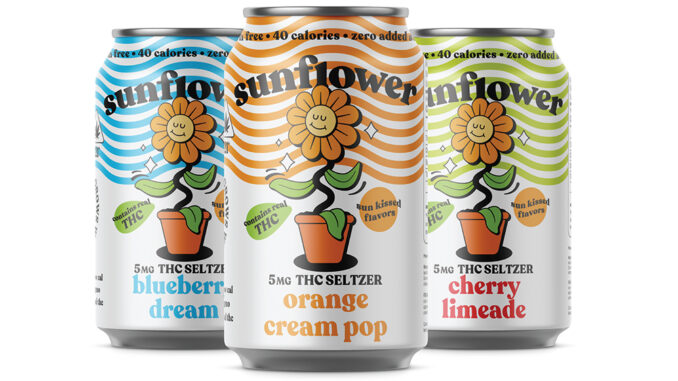
A proposed federal move to reclassify marijuana as a Schedule III substance in 2025 would fundamentally alter the business calculus for craft breweries producing hemp- and THC-infused beverages, offering long-sought financial relief while imposing a compressed timeline to adapt to a more formal regulatory structure.
Federal regulators have signaled that rescheduling would likely trigger a limited transition period, placing pressure on producers to align with new federal expectations or risk future enforcement. For craft breweries that have leaned into hemp-derived THC drinks as a growth category amid slowing beer sales, the shift presents both a stabilizing opportunity and a strategic reckoning.
At the center of the change is tax relief. Under current law, cannabis remains classified as a Schedule I substance, subjecting businesses to Section 280E of the tax code. That provision prevents companies from deducting most ordinary business expenses, including marketing, rent, equipment purchases and payroll. For beverage producers operating on thin margins, the result has been effective tax rates that can reach 70% or higher.
Moving cannabis to Schedule III would eliminate the 280E restriction, immediately improving cash flow and profitability. Brian Vicente, a founding partner at cannabis law firm Vicente LLP, said the change would remove what he described as a “crippling tax burden” for state-legal operators.
For craft breweries, that relief could free up capital to reinvest in brewing systems, packaging upgrades, quality control and compliance infrastructure that many have delayed due to tax pressure.
Beyond balance sheets, rescheduling would also begin to normalize cannabis beverages within the broader beverage alcohol ecosystem. Schedule III substances are recognized as having accepted medical use and lower abuse potential, a shift that signals reduced federal hostility toward the category. That signal matters for breweries seeking expanded retail access and outside capital.
While Schedule III status alone would not authorize interstate commerce, it could prompt new federal guidance that clarifies enforcement priorities, creating longer-term pathways rather than immediate national distribution.
Major alcohol retailers have already increased shelf space for hemp-derived THC drinks, and Schedule III status could accelerate that trend. While interstate commerce for THC products would still face restrictions, rescheduling opens the door to new Department of Justice guidance that could clarify enforcement priorities and create pathways for broader distribution over time. Institutional investors and lenders, many of whom have avoided cannabis-adjacent businesses due to federal risk, may also become more willing to engage.
David Craig, chief marketing officer of Illicit Gardens, said rescheduling validates what operators have argued for years.
“It signals a long-overdue shift toward science, reason, and reality,” Craig said, adding that the change reshapes how the industry can invest, innovate and operate going forward.
For craft breweries, however, the benefits come with new obligations. Schedule III classification introduces a more complex regulatory framework that treats cannabis-derived products closer to pharmaceuticals than consumer packaged goods. Increased oversight from the US Food and Drug Administration is expected, particularly around manufacturing standards, product consistency and labeling. Schedule III status increases the likelihood of FDA involvement over time, particularly around manufacturing quality, labeling and safety standards, even if full drug-style approvals remain a longer-term prospect.

That shift could require breweries to overhaul production processes for THC beverages, including tighter controls on dosing accuracy, ingredient sourcing and batch testing. Research and development would become more accessible under Schedule III, allowing producers to study efficacy and safety with fewer administrative barriers, but the expectation to meet higher standards would rise in parallel.
Lana Phillips, a senior specialist at Planet of The Vapes, said rescheduling reflects federal policy beginning to align with science and consumer behavior.
“There’s still more work to be done, but this is a meaningful step toward clearer rules, better research, and a more responsible, legitimate industry overall,” Phillips said.
Another looming variable is competition from intoxicating hemp-derived drinks, which have proliferated under looser interpretations of federal hemp law. Recent legislative debates around the Farm Bill and “total THC” definitions could tighten limits on those products. If marijuana-based THC beverages fall under a clearer federal framework while hemp-derived competitors face stricter caps, craft breweries operating in regulated cannabis markets may find the competitive field more balanced.
Travis Lane, operations manager at Nova Hemp, said reclassification would help drive consistency across the market by reducing stigma and supporting clearer regulation. He said the shift could foster a more transparent and stable environment for responsible operators focused on consumer safety and long-term growth.
Still, the one-year transition window poses real risk for smaller producers. Breweries that entered the THC beverage space quickly to capture demand may now need to decide whether they have the capital, expertise and appetite to comply with pharmaceutical-style oversight. Those that cannot adapt may exit the category entirely, while others may seek partnerships, acquisitions or licensing arrangements to stay involved.
Shawn Hauser, a partner at Vicente LLP, said Schedule III is a critical step but not the final destination. They said relief from 280E would unlock resources for innovation and reform, while pushing the industry toward a unified, science-based regulatory model for all THC products.
If federal and state policymakers tighten definitions around total THC, the competitive gap between regulated cannabis beverages and hemp-derived drinks could narrow, though the timing and scope remain uncertain. Lower federal risk may make some lenders and investors more comfortable engaging with the category, though widespread institutional participation is likely to remain gradual.
For craft breweries, the coming year may determine whether THC beverages remain a niche side project or evolve into a durable line of business. Rescheduling offers a clearer path to legitimacy and profitability, but it also raises the bar. The breweries that survive the transition are likely to look more like regulated beverage manufacturers than experimental offshoots of the beer world, marking a maturation of a category that has moved quickly from fringe to mainstream. Breweries that lack capital or compliance capacity may reconsider their role in the category, while others may pursue partnerships or consolidation.