Navigating a market where staying independent while trying to achieve scale and survival, Luke Bowen offers a useful distinction: Nostalgia can get a consumer’s attention, but it isn’t enough to keep a brand relevant.
The co-founder of Evil Genius saw that firsthand when his Philadelphia brewery became the steward of 21st Amendment, a 26-year-old California brand that had developed a following well beyond its home market. Evil Genius has continued producing the 21st Amendment portfolio while allowing the brand to remain distinctly 21st Amendment. The industry’s current wave of consolidation is increasingly less about making one brand disappear into another and more about determining what parts of a business actually need to be combined.
Case-in-point: Hardywood Park Craft Brewery’s October merger with Starr Hill Brewery is a good example. The all-equity deal brought Virginia’s two largest craft brewers by volume under one company, but Starr Hill remains Starr Hill. Both breweries continue operating at their existing facilities, their taprooms remain open, employees stay in place and Starr Hill’s owners now hold a minority stake in Hardywood.
The pattern has become difficult to ignore this year. Half Acre and Maplewood merged in Chicago while retaining their individual brands and taprooms. Oregon Beverage Collective brought Crux Fermentation Project, Cascade Lakes, Silver Moon, GoodLife and Tumalo Cider together around shared resources. Left Hand Collective partnered with Bootstrap Brewing, moving production toward Left Hand’s facility while maintaining Bootstrap’s Longmont taproom and identity. Icicle Brewing’s founders transferred majority ownership to the family behind CLS Farms while keeping Icicle independent and its existing leadership in place. And last week, Bottle Logic announced that it would join The Bruery and Offshoot Beer Co. under The Bruery Group while retaining its own brand and Anaheim operation.
For Bowen, the question isn’t whether an old brand can generate an initial rush from former customers. It’s whether the underlying brand has enough equity to earn another generation of customers.
“We need to just kind of get out of the way and let the brand, you know, be the brand,” Bowen said in a recent BREWER Podcast.
That is an important distinction for any brewery considering a legacy brand, merger or ownership transition. Nostalgia is an asset, but nostalgia isn’t the same thing as consumer equity.
Nostalgia says, “I remember that beer.” Equity says, “I know what that beer stands for, I recognize it, I trust it and I have a reason to buy it again.”
Bowen believes 21st Amendment already had that foundation. The brand had 26 years of history, recognizable beers, distinctive artwork and an established personality. Evil Genius’ job wasn’t to reinvent that proposition. It was to preserve it and make it accessible again.
“People are going back to beers that are tried and true and they know,” Bowen said. “21st Amendment has a 26-year history this year of being a company and has laid just phenomenal groundwork.”

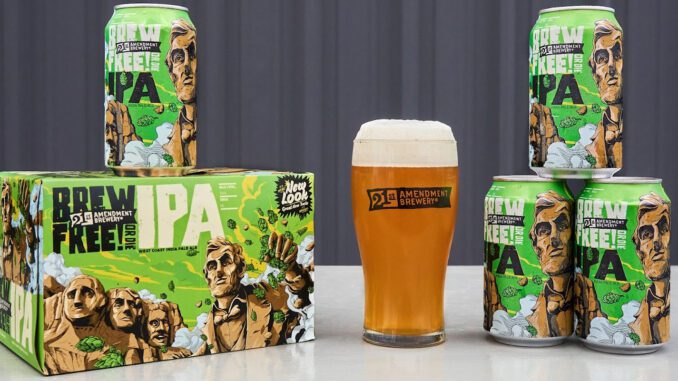
But Bowen also isn’t relying on nostalgia alone. Evil Genius is using established “hero” brands such as Hell or High Watermelon and Brew Free or Die as anchors, then looking for ways to extend those brands into variants and even nonalcoholic versions.
“The flavor has kept them for 25 years and it’s going to keep them around for a long time after that,” he said.
That’s a useful framework for others evaluating their own portfolios. A beer’s history may create awareness, but the product still has to give today’s drinker a reason to choose it. The strongest legacy brands can use familiarity as the entry point rather than treating it as the entire strategy. The other lesson is that consolidation doesn’t automatically mean surrendering independence. In fact, Bowen sees cooperation among independent breweries as potentially necessary to preserving the very brands that made craft beer valuable.
“I think that there definitely is a stronger together mentality that I think a lot of people have,” he said. “We believe strongly that kind of collaboration and working with brands is really the future.”
The economics make that easier to understand. Production, purchasing, packaging, distribution, sales and marketing don’t necessarily have to define a brewery’s consumer-facing identity. Evil Genius can put 21st Amendment beer on the same trucks, purchase cans and packaging more efficiently and use its infrastructure while maintaining separate brand strategies.
“The spreadsheet part” of the business still matters, Bowen said, but the operational efficiencies aren’t the reason consumers should care. The question isn’t simply, “Do we consolidate?” It should be, “What can we combine without destroying what customers value?”
A brewery doesn’t necessarily need another brewery’s brand. It may need its production capacity, purchasing power, distribution network, sales expertise, succession solution or management depth. Conversely, a brewery with those resources may benefit more from preserving another brand’s existing consumer equity than from replacing it with its own name.
That requires some humility. Bowen’s approach to 21st Amendment is deliberately restrained: understand why consumers valued the brand before deciding how to change it.
“We don’t need to mess it up,” he said.
That might be one of the more valuable pieces of strategic advice for an industry being forced to rethink what independence means. Staying independent doesn’t necessarily mean doing everything yourself. And joining forces doesn’t necessarily mean giving up what made a brewery worth saving. The smarter question may be whether two businesses can become operationally stronger while leaving consumers with the same reason to care. If they can, consolidation doesn’t have to be the end of a craft brand’s story. It can be the mechanism that gives the story another chapter.