Direct-to-consumer (DTC) sales continue to evolve from a pandemic-era necessity into a deliberate strategic choice for many cideries. But those who have lived the model caution that success requires more than simply opening an online store or bottle club. It demands clarity of purpose, operational discipline and, perhaps most critically, a willingness to own the full customer relationship.
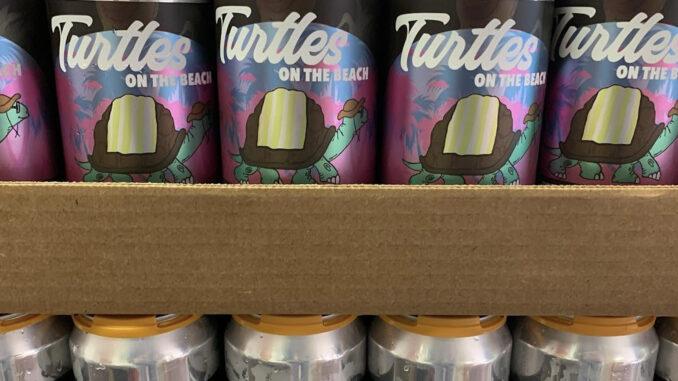
DTC can deepen margins and loyalty, but it also shifts risk, workload and strategic focus squarely onto the producer. For some cideries, DTC tools like subscription clubs emerged as reactive moves during COVID disruptions and have since cooled. Drake Pregnall, co-founder of Funky Turtle, said his team tested the approach early.
“We did fairly early on in our first couple years,” Pregnall said. “During pandemic times the online DTC and bottle club stuff was a great way to get some beverages out there. We have not done these as much in recent years. We probably will get back to it in the next few years.”
That pause is instructive. It suggests that while DTC mechanisms can be deployed quickly, sustaining them requires ongoing strategic commitment and operational bandwidth.
By contrast, 7bev Corp. built its membership program as a long-term relationship engine rather than a short-term sales lever. General Manager Toney Chay said the company’s 7Bev Elite Club is designed around loyalty and emotional connection. Subscription programs succeed when they are positioned as community infrastructure, not just recurring revenue.
“We created the 7Bev Elite Club, a membership that celebrates our most loyal guests,” Chay said. “Members get early access to limited releases, events, and farm experiences. It’s not just about exclusivity — it’s about belonging. The response has been incredible, and it’s helped us build deeper relationships with people who care about where their cider comes from.”
On pure economics in terms of the financial upside of selling direct, Chay was unequivocal.
“Absolutely,” he said. “Selling directly allows us to reinvest in quality — from our orchard practices to our fermentation process. When someone buys a cider at the farm or the Ale & Cider House, they’re not just purchasing a drink; they’re participating in our story.
”The financial benefit is matched by the creative freedom it gives us.”
Pregnall sees similar value, particularly in how DTC supports experimentation and product discovery.
“Even here at the Funkhouse production headquarters, we still do get a lot of cider drinkers that come to the source for cans to go,” he said. “We have the ability to do a lot of one off experimental kegs here in house that don’t usually get scaled up for distribution.
”If someone tries one of our core brands out and about, they love seeing what else we have to offer here under the shell.”
DTC can improve unit economics, but only if you account for the hidden costs of customer acquisition, staffing and experience delivery. The underlying strategic tension can mean higher margins and creative control versus the operational burden of driving foot traffic and managing retail hospitality.
7bev has committed fully to the direct model and Chay framed the decision as mission-driven.
“We’ve chosen to focus entirely on DTC, so our relationships are with our guests, not intermediaries,” he said. “That direct model means every decision we make — from pricing to production — is centered around the customer experience, not wholesale margins. It’s a slower path to scale, but it’s the most sustainable for our vision of quality.”
Pregnall, however, is still evaluating the right balance and sees distribution as a future lever rather than a current focus.

“It’s hard to know yet without the taproom being open,” he said as the Toledo brewery and cidery plans to open the spot this year. “I think for the first couple years we may draw closer to home. I used to truck pretty far for an independent business.
”Someday, maybe five years or so down the road I could see us scaling up cider and seltzer for actual distribution. That would allow me to spend more time brewing small batch beers for the pub.”
There is no universal DTC/distribution mix. The right answer depends on a company’s own production goals, capital structure and brand vision.
Both did warn that industry narratives around DTC can be overly simplistic. Chay’s biggest caution is operational realism.
“(People may think) DTC is easier. It’s not,” he said. “You’re taking on everything — production, sales, hospitality, and storytelling. But it’s also the most rewarding model because you get to see every smile, hear every compliment, and fix any issue instantly. You’re fully accountable to your craft and your customers.”
Pregnall points to a different blind spot as consumer segmentation assumptions can limit growth.
READ MORE: Rethinking Expansion Through Distro: Why These Cideries Keep Sales Close to Home
“People may have the misconception that cider drinkers are not beer drinkers,” he said. “Some beer drinkers may have the misconception that if they are a fan of beer, cider is just too different entirely for them to find one they like. What we all have to do is constantly work to get folks to try something new.”
That highlights an often-overlooked DTC advantage: the ability to directly challenge category boundaries through sampling and education. DTC success can depend as much on market education as on sales mechanics.
For orchard-based startups considering their first DTC push, Chay emphasized starting with experience design rather than scale ambitions.
“Build experiences, not just products,” he said. “People visit farms and taprooms because they want connection — to the land, the process, and the makers. Keep your DTC offering personal, authentic, and local before you think about scaling.
”Every great brand starts with a small group of people who truly care.”
That guidance aligns with the broader pattern that DTC works best when treated as a brand-building ecosystem, not merely a higher-margin sales channel.
The next phase of DTC in craft cider will likely be defined by intentionality. Pandemic-era experimentation proved the model’s viability. What comes next is operational refinement. For some cideries, that will mean doubling down on membership communities and farm-driven experiences. For others, it will involve using DTC as a test lab before scaling through distribution. Direct-to-consumer can be powerful, but only for producers willing to fully own the customer relationship and the workload that comes with it.