Where there are a lot of taps and retail shelves with a lot of hop saturation and high-ABV releases, Arlington Brewing found unexpected traction by moving in the opposite direction.
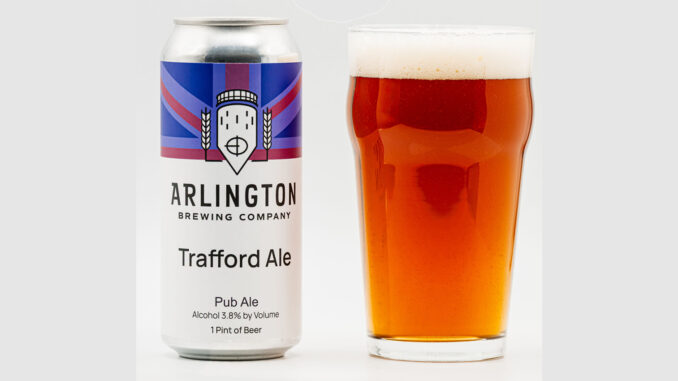
Trafford Ale, the Massachusetts brewery’s 3.8% English-style ordinary bitter, recently earned a gold medal at the 2026 World Beer Cup in the “English Mild or Bitter” category, but founder and head brewer Tom Allen said the beer had already shown signs internally that it was resonating in ways the brewery didn’t fully anticipate.
“We were unsure if a 3.8% ordinary bitter would be well received in a market dominated by hazy IPAs,” Allen said. “We were surprised when it was the second most ordered beer, after our flagship NEIPA.”
The beer’s growth became less about chasing trend categories and more about identifying an underserved drinking occasion. Allen said customers gravitated toward the beer because it delivered flavor without the weight or alcohol intensity many consumers have come to expect from a craft beer.
“People just really appreciated the flavor of the beer and how it was a delicious alternative to the hop-driven beers they typically encounter,” he said. “And the fact that it’s lower on the ABV scale means that the moms and dads out there can enjoy a few pints while still keeping an eye on the kids at our beer gardens.”
That realization helped validate something many breweries have debated in recent years: whether consumers actually want more approachable offerings but simply haven’t been given compelling versions of them. Trafford Ale’s gold-medal performance suggested there may still be room for traditional styles when they are executed with intention and authenticity.
Perhaps most notable for Arlington is that the beer’s first major competition appearance resulted in a gold medal.
Allen believes part of the beer’s success comes from resisting the temptation to modernize the style beyond recognition.
“I think this beer is just really honest about what it is,” he said. “We use British malt and hops, and a British yeast strain, and try to stay true to the heritage of the style.”
That commitment started with the beer’s origin story. Allen said the concept came from a friend from the Manchester area of England who missed traditional pub ales from home.
“He was missing a ‘proper pint’ from home and asked if I’d be interested in making a pub ale,” Allen said. “We discussed what he was looking for and it basically came down to, ‘Just make Boddington’s, mate! Not the Boddington’s you can get now, the original, ya know!’”
Rather than simply recreating a nostalgic beer, Allen approached the project as research and refinement. He sampled multiple examples of the style before developing a recipe that focused on drinkability while still maintaining depth of flavor.

“We put a recipe together, aiming for a low ABV but a rich, full flavor,” he said.
That philosophy has also shaped how Arlington Brewing positions the brand internally and externally. Instead of treating the beer as a niche taproom offering or seasonal novelty, the brewery uses Trafford Ale to challenge consumers in what they may hold about flavor intensity and alcohol content.
“We like to highlight that you can enjoy full-flavored beer without a high alcohol content,” Allen said. “I think the trend toward double and triple IPAs a while back had the effect of convincing people that the alcohol really drives the taste and aroma of a beer, but that’s not necessarily the case.”
For anyone evaluating a portfolio strategy, Trafford Ale’s growth also reinforces the value of diversification within a lineup. While many continue competing aggressively within the saturated IPA categories, Arlington found differentiation by offering contrast.
Allen said the brewery also measures the beer’s success beyond raw sales performance.
“We look for this beer to expand our customers’ idea of what good beer can be,” he said. “There’s a lot of great beer out there in all different styles, not just IPAs, so if this beer is an opportunity for people to try something new that they end up liking, that’s a win.”
READ MORE: How Early Planning Shaped Verboten & Gravity’s Collab Fest Beer
The beer’s World Beer Cup gold may create another layer of opportunity. Allen noted the brewery is already considering ways to connect Trafford Ale’s British identity with upcoming tourism surrounding Boston hosting a World Cup match between England and Ghana on June 23.
“Hopefully it will open doors,” Allen said. “We’re looking for opportunities to introduce Trafford to Brits who will be visiting for the game.”
Trafford Ale may serve as another reminder that differentiation does not always require innovation through extremes. In some cases, growth can come from executing classic styles with discipline, identifying overlooked customer occasions and giving consumers permission to rediscover balance.