Your cidery doesn’t necessarily need to create its own destination to benefit from tourism. Sometimes the smarter strategy is to find an established destination that already attracts the customers it wants and figure out how to become part of the experience.
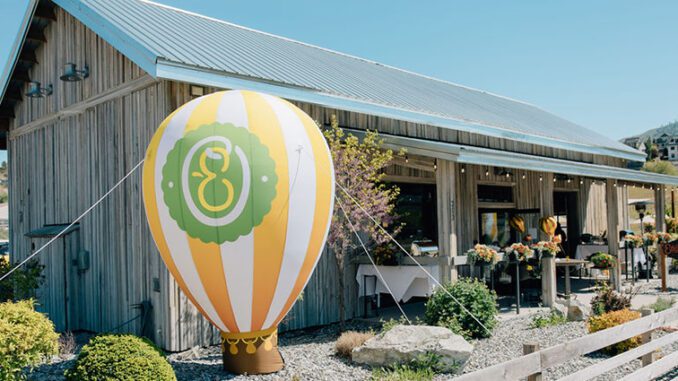
That is the approach Endless Orchard Cider has taken in Lake Chelan, Washington, where wine tourism has already established a strong tasting-room culture.
For General Manager Vicki Daigneault, the opportunity wasn’t about trying to compete with wineries for visitors. It was about becoming a complementary part of an itinerary that was already bringing people to the area.
“The wineries here in Chelan have built an incredible reputation, and we’ve been welcomed,” Daigneault told BREWER & Cider Business. “From the beginning, we built relationships with the Lake Chelan Wine Valley, wine tour companies, and local wineries.”
The goal isn’t necessarily to convince visitors to change their plans. It is to give them a reason to add your business to plans they have already made. Endless Orchard has worked to establish those relationships through collaborations, product placement and participation in the broader local beverage community. The cidery collaborated with Vin du Lac on a spring market and serves local wines in its own tasting room, giving groups more beverage choices. Those relationships have also created a path for the cider to move in the opposite direction.
“Because we’ve approached the community with a collaborative mindset, many wineries now carry our cider at their facilities,” Daigneault explained. For other cideries, breweries or beverage businesses considering a similar strategy, that may be one of the more important lessons: The relationship doesn’t have to end when a visitor leaves your tasting room.
A winery that recommends a nearby cidery can help generate traffic. A hotel that tells a guest where to find a particular cider can introduce the brand before the customer ever visits. A tour company can influence an entire itinerary. And a winery carrying another beverage company’s product creates an additional point of sale without requiring that producer to generate the customer itself.
Daigneault said that broader networking has helped Endless Orchard become part of the destination rather than having to build all of its own demand.
“Relationships are huge in a tourism market,” she said. “Wine tour companies, hotels, restaurants and local organizations all influence where visitors go.”
The strategy also requires understanding that customers arriving through another tourism category may have different expectations than people specifically seeking out cider.
“We know many guests may have already visited a few wineries, so we want Endless Orchard to feel like a fun change of pace,” Daigneault said. “Cider gives people something crisp, approachable, and different, without making the experience feel overly formal.”
That is a useful distinction for any anyone trying to become part of an established tourism circuit. Being complementary doesn’t mean being interchangeable. In Chelan, cider also provides Endless Orchard an opportunity to reach people who weren’t necessarily looking for cider in the first place.
“The region draws thousands of visitors each year,” Daigneault said. “Between wine tastings, vineyard tours, food and wine events, and the scenic lake and mountain views, the wine scene is definitely a meaningful part of our traffic.”
The important business opportunity, she said, is that some of those visitors discover the cidery because it becomes part of their overall tasting itinerary. That is where tourism traffic can become more than just tasting-room foot traffic. A visitor who discovers a product while traveling may become a retail customer after returning home, even if that person never makes another trip to the tasting room. For Endless Orchard, the tasting room is therefore also a customer-acquisition opportunity.
“The tasting room creates a valuable opportunity for us to interact directly with the consumers on a personal level,” Daigneault said.

That interaction allows the company to introduce customers to the product, explain its apples and production, answer questions and, importantly, send customers home with the product.
“Even if they don’t become a repeat visitor right away, they leave knowing the brand and may recognize it later at retail,” Daigneault said.
That changes the way a tasting-room visit can be evaluated. The immediate sale matters, but so does what happens after the customer leaves. A visitor who purchases a bottle or package to take home has already moved beyond a sampling experience. A visitor who later recognizes the brand at a retailer has another potential purchase opportunity. For a producer operating in a tourism market, the tasting room can function as a physical customer-acquisition channel for markets well beyond its geographic footprint. That makes partnerships particularly valuable because they can extend the reach of the tasting room without requiring the cidery to be physically present everywhere.
The same principle applies to partnerships outside of the wine industry.
Daigneault said events and local collaborations have been particularly valuable for Endless Orchard. One example is its “Tunes and Tacos” event, which combines live music with a taco bar using ingredients from nearby retailers and pairs the food and entertainment with the company’s cider. But the specific event may be less important than what it demonstrates about the broader strategy.
“Whether it’s partnering with another beverage business, hosting a comedy night, joining community events or working with hospitality partners, the greatest takeaway has been discovering the ideal blend for a lively evening,” Daigneault said.
The partnership doesn’t always have to be built around another producer. Hospitality, food, entertainment and community organizations can all contribute something that helps create a more compelling reason for visitors to spend time at the business. The key is finding where the audiences and experiences overlap.
READ MORE: 3 Useful Tools for Tasting Room Associates
For a cidery looking at an established wine destination, that could mean partnering with wineries and wine-tour companies. The underlying strategy is to identify where visitors are already spending their time and determine how the business can add value to that existing experience.
Endless Orchard didn’t begin by asking the local tourism ecosystem to send customers its way. It first became part of that ecosystem. Serving local wines, collaborating with wineries and participating in community events creates reciprocal value. The business becomes another participant in the destination rather than simply another company looking to extract visitors from it. That distinction can determine whether a partnership becomes an ongoing business relationship or remains a one-time promotion.
The opportunity may be less about creating a completely new reason for consumers to travel and more about understanding the reasons they are already traveling. A destination that has spent years building wine tourism has already invested in consumer awareness, hospitality infrastructure, tour operators, hotels, restaurants and marketing. A cidery doesn’t have to duplicate all of that work to benefit from it. It does, however, have to earn its place within the ecosystem.