For years, especially at the genesis of BREWER more than a decade ago, the craft beer industry measured success by openings, production growth and expanding distribution footprints. Today, many brewery owners are asking a different question: Is the current downturn temporary, or has the industry reached a new normal?
A recent Reddit discussion among brewery professionals suggested the answer may lie somewhere between those extremes. While opinions differed on whether craft beer will eventually rebound to previous highs, a broad consensus emerged that beer itself is not disappearing. Instead, the market is undergoing a correction that is rewarding disciplined operators while exposing weaknesses that accumulated during years of rapid expansion.
Many participants argued that the industry’s growth trajectory simply became unsustainable. As thousands of breweries entered the market over the past two decades (1,409 breweries operating in 2006 vs. 9,578 in 2025 according to the Brewers Association), many were often serving similar products to increasingly fragmented customer bases. As consumer spending tightened and competition intensified, businesses that relied on continued market expansion suddenly found themselves fighting for the same local customer.
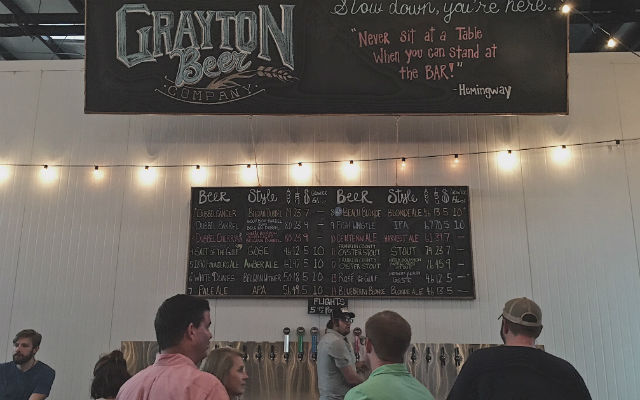
Many have suggested the current environment should be viewed less as a collapse than as a rebalancing. They noted that business closures naturally receive more attention than successful operators quietly maintaining profitability, creating an impression that conditions are worse than they may actually be. At the same time, they acknowledged that today’s marketplace demands a much stronger business foundation than it did during craft beer’s rapid growth years. That foundation increasingly begins with the taproom rather than the brewhouse.
Also, breweries that have shifted their focus from chasing regional recognition to strengthening local relevance is prevalent. Instead of relying on limited-release can drops or destination tourism, many successful breweries are instead investing in guest experiences that encourage repeat visits from nearby residents. Live entertainment, community partnerships, knowledgeable staff and welcoming hospitality have become just as important, or moreso, as recipe development.
Many suggest breweries should think more critically about product portfolios. Rather than offering multiple slight variations of popular styles, success should be coming from curated draft lists that appeal to a wider range of drinkers while reflecting seasonal demand and local preferences. An educated front-of-house teams that can confidently guide customers through those offerings can be viewed as a competitive advantage.
Underlying many of the observations was a common belief that excellent beer has become the minimum expectation instead of a differentiator. Consumers increasingly expect quality as the baseline. What separates businesses now is operational execution, customer experience and the ability to remain flexible as preferences evolve.
Financial discipline emerged as a recurring theme as some argued that some breweries expanded too aggressively during favorable years, taking on debt or increasing production capacity based on expectations of continued growth. As demand softened, those fixed costs became increasingly difficult to support. Others pointed to leases, rising operating expenses and labor costs as pressures affecting otherwise viable businesses.

There is a distinction between breweries built around passion and those built around sustainable business practices. Brewing expertise alone is no longer enough. Owners must understand finance, staffing, marketing, customer acquisition and long-term planning with the same level of attention they gave to recipe formulation at the start.
There’s also a challenge to the common assumptions surrounding younger consumers. While many headlines have focused on Gen Z drinking less alcohol, several in the industry argued that the issue is more nuanced. Younger adults have more beverage choices than previous generations, including nonalcoholic options, cannabis products in some markets and ready-to-drink beverages. Success may depend less on convincing consumers to drink more beer and more on giving them compelling reasons to choose your particular brewery experience.
READ MORE: How Targeting “Knowledge Gap” Consumers & Understanding Gen Z Habits Could Boost Sales
Others emphasized that economic conditions remain an important factor. Premium craft beer represents discretionary spending, making it particularly vulnerable when household budgets tighten. In that environment, breweries must work harder to demonstrate value through quality, hospitality and community engagement rather than assuming customers will remain loyal simply because they appreciate independent beer.
Not everyone believes the industry would fully return to its previous peak. Several have suggested craft beer’s extraordinary expansion represented an exceptional period rather than a cycle destined to repeat. Instead of expecting another decade of explosive growth, they envisioned a more mature industry characterized by slower expansion, healthier competition and businesses sized appropriately for their local markets.
Despite differing opinions about the industry’s future growth, one point generated remarkably little disagreement: beer itself is not going away. Brewing has survived economic downturns, shifting consumer preferences and countless cultural changes over centuries. The breweries that endure this period, contributors suggested, will likely be those willing to evolve alongside their customers rather than waiting for customers to return to old habits.