Music is often treated as background noise in a taproom, but experienced cideries say it deserves the same strategic attention as menu design, lighting or staffing. The right soundtrack helps shape a customer’s perception of the brand, while overlooking music licensing can create unnecessary legal exposure and unplanned expenses.
For many cideries, one of the biggest surprises after opening is learning that streaming music in a commercial setting carries obligations beyond simply paying for a consumer music subscription. Public performance rights are typically administered through organizations such as ASCAP, BMI and SESAC, requiring businesses to obtain the proper licenses based on how music is used.
Bob Manley, co-founder of Hermit Woods Winery & Eatery, said owners should recognize that music licensing is part of the cost of operating a hospitality business rather than an optional expense.
“If you’re streaming or presenting music in a commercial setting, you need to understand that public performance rights are not optional,” Manley said. “In most cases, that means maintaining licenses with ASCAP, BMI and SESAC … and potentially others depending on your programming.”
Those costs can become meaningful operating expenses, something Manley believes should be included in financial planning from the beginning.
“We carry licenses with all three organizations, and together they cost us several thousand dollars per year,” he said. “The fees are based on factors such as venue size, capacity, and how music is used in the space (background versus live performance).”
Rather than viewing licensing as an unexpected bill, Manley recommends treating it like insurance, food safety or alcohol compliance and another required business expense that protects the operation.
“My advice to anyone opening a taproom or hospitality space is to approach music licensing with caution and a clear understanding of the requirements from the start,” he said. “Music adds tremendous value to a space, but it comes with legal and financial responsibilities that need to be factored into the business model from day one.”
That advice comes from experience. Hermit Woods didn’t fully understand the licensing landscape immediately after opening, resulting in a lengthy process to resolve compliance questions.
“In the early days, before we fully understood the scope of the issue, yes we ran into challenges,” Manley said. “It took the better part of a year working through conversations with all three licensing organizations to clarify how music was being used in our space and to bring everything into compliance.”
While the experience ultimately ended with the appropriate licenses in place, Manley said the process took considerably longer than expected and reinforced the importance of understanding licensing requirements before opening a venue.
For Ben Wenk of Ploughman Cider, complying with music licensing requirements extends beyond avoiding legal issues. He sees it as part of supporting the broader creative economy.
“We have an obligation, in my opinion, as creatives, to support creatives,” Wenk said. “We create beverages, we’re making things from scratch. It’s very similar to art.”

That philosophy shapes both Ploughman’s entertainment programming and its willingness to pay required licensing fees.
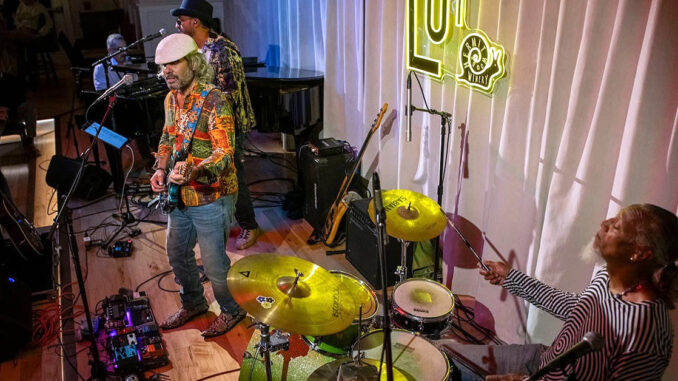
“We’re honored to support creatives by paying our bands, giving preference to original songwriting, and, although they can be jerks about it sometimes, paying all of the publishing fees required to support the publishers of the live music and the recorded music we’re playing during service,” Wenk said.
Beyond compliance, owners should be intentional about how music reinforces the brand customers experience when they walk through the door. Measuring the direct return on investment may be difficult, but that doesn’t diminish music’s influence on customer perception.
Richard Yi of Brooklyn Cider House said most cideries probably haven’t isolated music’s effect on sales, though he believes there are opportunities for operators willing to experiment.
“In theory, you could test it by comparing similar days with different music and seeing how it affects sales per visitor,” Yi said. “We haven’t done that kind of analysis yet, but it would probably be a worthwhile experiment.”
While hard data may be elusive, Wenk believes music should be evaluated as another component of the guest experience rather than simply background entertainment.
READ MORE: How Cideries Can Use Music to Build Branding & Influence Consumer Behavior
“I don’t know how you can do that,” Wenk said when asked about calculating ROI. “But creating good experiences for folks is 100% the name of the game and the music you’re playing for guests is a huge part of creating that experience.”
He encourages other owners to think about playlists with the same level of intention they apply to product development or taproom design.
“If your taproom sounds like an Applebee’s, you’re probably giving people the expectation that they’re going to have an experience that’s a little ordinary,” Wenk said. “In the same way, you can’t alienate people.”
Instead, he recommends finding music that reflects both the accessibility and personality of the brand.
“Try to make a music atmosphere that matches the accessibility and uniqueness that your ciders attract,” Wenk said. “More than anything, put some thought into it and change it as needed. Think about how hearing this song in your space makes you feel and be analytical about it.”