For many brewery owners, leadership starts with good intentions. You want to create a positive culture that supports employees and you may look to avoid unnecessary conflict. You trust their staff, praise their work and try to keep the workplace collaborative rather than confrontational.
But as teams grow, that style can quietly create bigger problems.
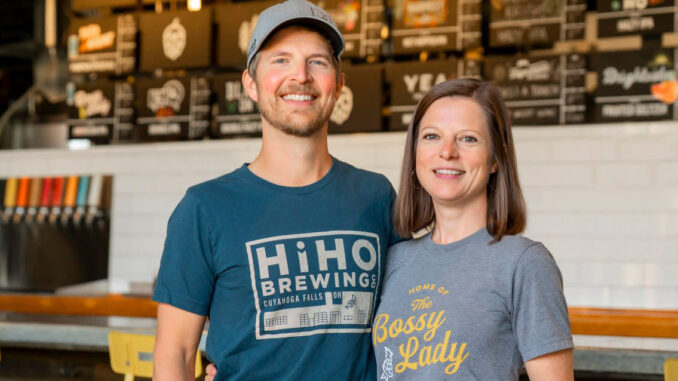
For Ali Hovan, co-owner of HiHO Brewing, that realization came through what she described as moving from a “protect” leader to a “liberate” leader. She shared via a video recording at the 2026 Ohio Craft Brewers Conference there was a shift that changed how she and her team approached accountability and employee development for day-to-day operations.
“We realized that when we started, we were in protect, which is low challenge and high support, and it created a culture of entitlement and mistrust,” Hovan said.
That “protect” leadership style often feels positive in the moment. Owners may be encouraging, flexible and supportive, but they avoid direct feedback and difficult conversations. Expectations are instead implied instead of clearly stated. The result, Hovan said, is confusion.
“If you’re constantly like, ‘Hey, you guys are awesome. You guys are rock stars. You guys are good,’ but there’s never any clear expectations as to, ‘This is what I need you to do, this is what I expect done by this deadline,’ then people just start to expect, ‘Well, I guess I’m a rock star,’” she said.
When frustration eventually surfaces, employees often feel blindsided.
“You’ve been telling us all along that we’ve been doing great, and then now we’re learning that we’re not,” Hovan said. “So can we actually trust what you’re saying?”
That mistrust pushed the brewery’s leadership team to rethink how they managed people.
Hovan said the goal became moving into what she calls the “liberate” quadrant, showing high support paired with high challenge.
Support, she explained, includes training, resources, time, opportunities, recognition and appreciation. Challenge means giving direct feedback, promoting excellence, creating deadlines, enforcing accountability and setting stretch goals.
“That’s something that we definitely didn’t do enough of, and now we’re trying to celebrate more,” Hovan said. “But also the high challenge and giving direct feedback. That’s always hard.”
She said many brewery owners struggle with that part most.
“I don’t know how people find that easy, but giving direct feedback has been so important to us,” Hovan said. “And then just accountability and deadlines. It seems like super simple things, but it gets easier said than done.”
One of the first lessons was understanding that empowerment does not come from stepping away and hoping employees manage themselves.
As the brewery grew from a small team into a staff of more than 30, Hovan said ownership — which includes her and her husband Jon — learned that working less in the business required more systems, not fewer.
“We were kind of all like, ‘Hey, we’re adults. Adults can lead themselves,’” Hovan said. “And we quickly realized when you go from a team of 10 to 30-plus, that doesn’t really work. You need strong leaders. You need leaders with accountability, and you need structure to be put in place.”
That structure started with meetings.
Instead of relying on conversations after work or catching issues in passing, the brewery built scheduled leadership meetings with repeatable agendas. Tuesdays include leadership and production meetings, while ownership meetings between the husband and wife are set for Thursday mornings during work hours.

“Believe it or not, we wouldn’t schedule time to do that, and we would be home from work and talking about work,” Hovan said. “We’re like, ‘No, no. Can’t do this anymore. Let’s have meetings built into our work day.’”
Each meeting follows the same format, reviewing the previous week, upcoming events and operational priorities.
Clear deadlines were another operational shift.
Rather than assuming urgency was understood, leadership began explicitly communicating timelines.
“Just simply saying, ‘I need this in a week,’ or saying, ‘Hey, is it realistic for you to get this to me in two to three days?’” Hovan said. “Or, ‘This is a priority. Can you give this to me now?’ It’s been really helpful to say that, rather than just assume people understand the importance of something.”
Formal accountability systems followed.
Like many breweries, the employee handbook included references to verbal and written warnings, but there was no practical system behind it.
“In our handbook, we always said we had a corrective action plan … but we never had any paperwork to follow up with that,” Hovan said.
READ MORE: Leadership Development Leads to Longevity
Over the past year, the Hovans have created formal documentation for verbal warnings, written warnings and next steps so managers had a consistent process to follow.
“If you give a verbal warning, this is where you report that. If you give a written warning, this is where you report that,” Hovan said. “So not only do we have the actual plan, but we have everything to fill it out to make it really easy for our managers to follow through.”
Attendance and tardiness policies also needed clearer standards. Leadership established a five-minute grace window and tied repeated tardiness directly into the corrective action process.
Promotion from within became another major part of building a stronger leadership culture. Hovan said one of the best examples was the brewery’s general manager, Amber Blazeff, who started working weekends in the kitchen and behind the bar before moving into a full-time leadership role.
“She started with us this weekend eight years ago, and she worked in the kitchen and as a bartender, and now she’s our general manager,” Hovan said. “She has kicked ass and worked really hard over the last eight years.”
That growth, Hovan said, happened because the brewery invested in leadership development rather than simply filling management roles from outside.
“It’s awesome when you can promote from within,” she said. “That’s pretty much what we always do.”
She believes that process only works when support and challenge exist together. Employees need opportunity, but they also need standards. For brewery owners, Hovan said the biggest lesson is that moving from protect to liberate is not immediate.
“Although we’ve been working on this for two years, I would definitely say that it takes time to get from one quadrant to the other,” she said.
As a leader, you can still fall back into old habits. Those difficult conversations can still feel uncomfortable and direct feedback rarely becomes easy.
“It’s still a struggle going back to our own habits sometimes,” Hovan said. “But I think it just keeps getting better.”
She said one of the most valuable parts of the process in changing management styles was simply realizing that leadership struggles are normal. She believes the answer is not being a nicer boss or a tougher boss. Instead, it’s being clearer.