


Adapting to Consumer Expectations
Many are bracing for a year in which customer expectations aren’t just shifting; instead, they have settled into long-term norms around price, flavor, brand experience, and the value of what ends up in their glass.
The old assumptions about how drinkers engage with beer no longer hold. What’s emerging instead is a consumer who wants more meaning for their money and more intentionality behind every pour. As breweries plan for the coming years, most agree the landscape isn’t defined by one trend but by the permanence of heightened expectations.
Chris Jacobs, founder of Beer Zombies, said one of the most permanent changes is the motivation behind the purchase.
“The biggest shift we’ve seen isn’t just in what customers drink, it’s in why they drink it,” he said. “People don’t just want a flavor, they want a feeling.”
Drinkers, he added, are seeking curiosity, freshness, and consistency but also transparency and perceived value. That expectation has pushed the Las Vegas-based brewery to double down on branding, story, and taproom energy because “it’s not just about the pour anymore. It’s about the pulse that comes with it.”
That connection-driven mindset intersects with another lasting expectation: beer must justify its price. And it has to do so at a time when operating costs remain high while consumers resist the idea of higher shelf prices.
“The end consumer seems to be the last one to realize prices need to come up,” said Travis Peterson, founder and owner of Meadowlark Brewing in Billings, Montana. He expects variety to narrow as breweries streamline portfolios to maintain margins in off-premise channels. Meadowlark recently reduced its canned lineup from 12 SKUs to four, a move he said reflects where consumer spending is headed.
Breweries are also pushing back on the assumption that beer should remain a budget-friendly option even as ingredient and labor costs rise.
“Beer has always been viewed as ‘cheap’ compared to other alcoholic products,” said Jerry Siote, Director of Brewhouse Operations at Lone Tree Brewing. “However, if this view is not updated quickly, then brewers won’t be able to make the math work.”
He noted that the Colorado brewery has raised prices but not at the same scale as restaurants or bars.
Some see value not just as a price issue, but as a total-experience equation — especially on-premise.
Ryan Bandy, Chief Business Officer at Indeed Brewing, said high expectations around taste and taproom execution aren’t going away.
“Deliciousness wins out,” he said, adding that customers expect breweries to match the $8 pint with top-tier quality and presentation. Clean glassware, proper pours, a polished atmosphere, and knowledgeable staff all matter.
“If, as an industry, we are going to say a pint of beer is worth $8, then we better prove it,” he said.
For others, the challenge is refining how they interpret consumer behavior without overreacting. CEO and President of Schlafly Beer, David Schlafly, said leadership teams will need to rely on qualitative insight over trend-chasing.
“It’s important not to chase the supposed trends with knee-jerk responses,” he said, adding that an ability to read subtle shifts will separate breweries that adapt strategically from those that pivot too quickly.
Many of those shifts are tied to what customers expect out of brewery spaces themselves. Taprooms remain a crucial differentiator, and operators say the model is evolving.
Jack Dyer, co-founder of Topa Topa, said stable food partnerships continue to be a reliable piece of the experience.
“Partnering with solid food partners in each of our spaces provides stability without the complexity of running both a brewery and a restaurant,” he said, noting consistency can be vital across taproom locations.
Price sensitivity, however, remains the most universal theme.
Wesley Keegan, founder of TailGate Brewery, said customers are quicker than ever to react to even modest increases. He pointed to food pricing as an example.
“The more prices go up, the louder customers are that they want prices back down,” he said.
Keegan encourages breweries to consider “Barbell pricing” — having higher-end offerings while maintaining clear value choices.
Chad Heath, Karl Strauss’ Beer Division COO, said the industry’s old reputation as an “affordable luxury” is fading, and breweries will have to distinguish themselves without relying solely on price.
“Value, quality, flavor differentiation… all of this plays a critical role,” he said. He argues that breweries must find offerings that remain exciting without joining a race to the bottom.
New Technology
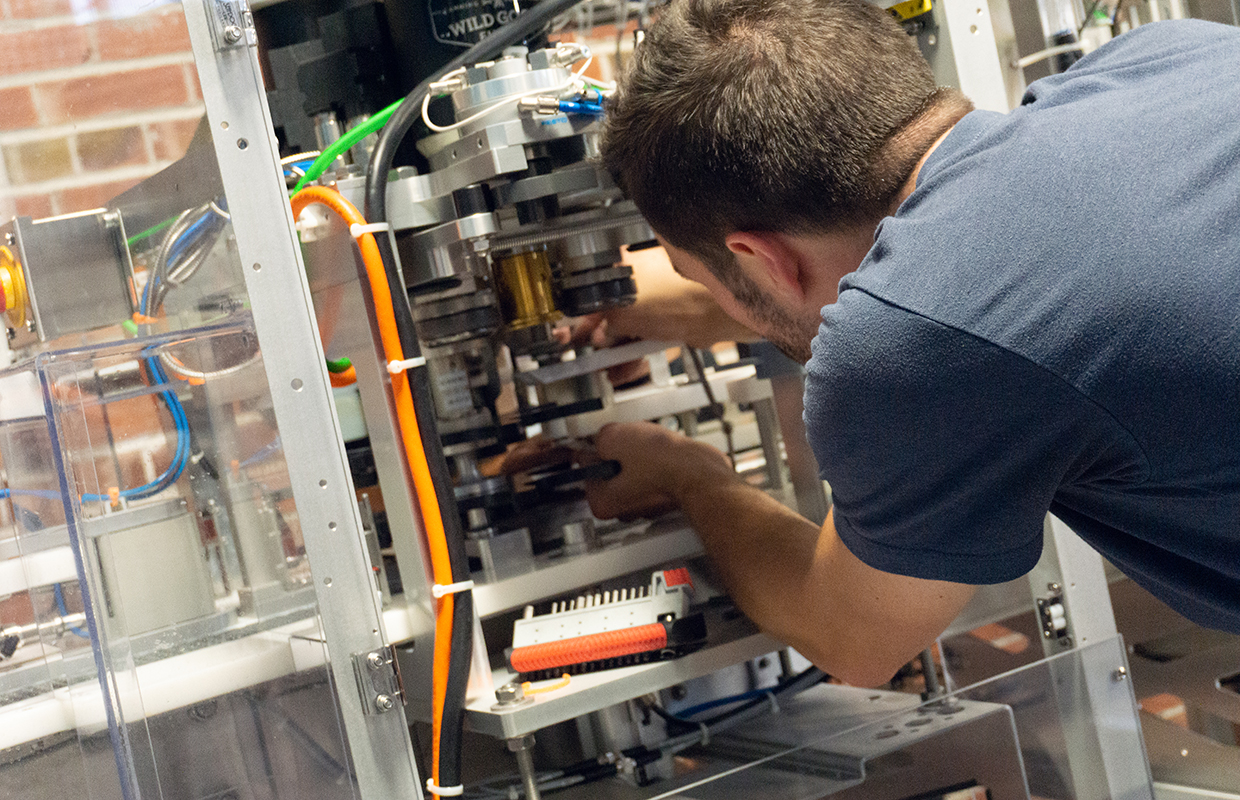
Emerging technologies like AI tools and predictive data tracking are finding realistic roles in smaller and midsize operations. The expectation is more office automation, smarter packaging, and maintenance systems. But don’t expect the brewhouse soul to be automated away.
Marketing and back-office tasks are the low-hanging fruit for these uses, Bell pointed out.
“As breweries have to upgrade their marketing efforts, AI can be a vital tool,” he said.
Many brewers described AI as a capable assistant rather than a replacement. Heath called it “a very powerful tool” that moves time-consuming tasks to a point where an expert can review and refine the output.
“In time, AI will be prevalent in all areas of operations for many industries. We are embracing this tool and using it to improve our efficiencies across the board,” he said.

Still, technology that enhances the craft without watering things down tends to win support. Jacobs said the real opportunity for Beer Zombies “is using technology to enhance the craft, not sterilize it.” He pointed to AI-driven analytics that “can help us better predict trends or optimize yeast health,” alongside digital engagement tools such as smart loyalty systems and augmented-reality storytelling that deepen fan connection.
“At Beer Zombies, we’ll always keep the human touch — the fingerprints, the art, the chaos that makes craft beer alive,” he said.
Smaller operations are already practical about limits. Peterson and Siote noted uses that save time and improve work quality without large capital outlays.
“We already use AI for office documents and data analysis to some extent,” Peterson said, adding that AI can accelerate label-design concepting while leaving final artwork to humans. Siote, whose brewery produces roughly 4,000 barrels, said AI “doesn’t seem to be a huge risk/reward discussion from a physical labor standpoint, but could have some efficiencies with marketing/creative idea generation.”
For some brewery leaders, the most immediate tech wins are in the ERP and data realm. Bandy pointed to AI and data-tracking tools that can live inside enterprise resource planning systems and provide predictive models useful for purchasing, logistics, and sales.
“There’s definitely some small savings available now from the current democratization that AI chats have created,” he said.
Time savings and measurable KPIs drew praise from operators who want tools that free them for higher-value work. Keegan encouraged practical adoption, mentioning the use of tech for P&L analysis, KPI implementation, and social media management.
He warned, however, against passing off raw AI output as the brewery’s voice.
“You can use it. But edit it a lot. That’s disingenuous, and breweries are genuine,” he said.
READ MORE: The 3 Pressing Topics for Any Brewery — Brewer Mag’s 2025 Expert Outlook
Of course, each brewery needs to find its own way to adopt tools that return measurable time or cost savings, use data to avoid reactive decisions, and apply automation where it preserves quality or reduces waste. But continue to keep human skill at the center of brewing and guest experience.
“If tech can help us brew smarter, connect faster, and waste less, that’s how we stay dangerous in a world that’s moving fast,” Jacobs said.
Forward Thinking
The next five years will demand sharper pivots, more expansive portfolios, and more intentional customer engagement. While rethinking the fundamental shape of your company, many argue that staying competitive is less about reinventing the model and more about evolving it with discipline and purpose.
For some, diversification is already underway. Peterson said Meadowlark’s team began shifting its model during the pandemic, when small-format packaging crowded shelves and squeezed off-premise opportunities. With competitive pressure rising, he pursued new licensing.
“We are transitioning from being only a brewery to being a beverage company to hedge our bets against a softening beer market,” he said.
Others see the coming years as a period of near-constant refinement rather than a single major shift. Indeed’s entire business is always in motion.
“We are constantly re-evaluating, tweaking, and changing every piece of our model–from recipes, to structure, to creating or retiring products, to exploring new revenue channels like contract brewing, to new events, and such,” Bandy said.
In his view, staying competitive comes from continual adaptation while keeping the brewery’s core mission intact.
That tension between evolution and identity surfaced from many who shared insights with Brewer.
Bell said breweries can no longer rely on being “found” by drinkers.
“We will have to adapt to actively reach new customers and also work hard to maintain our current customer base,” he said, pointing to a future where intentional outreach becomes a nonnegotiable part of staying viable.
For Beer Zombies, Jacobs said the next five years will be defined by how breweries connect with people, not simply what they produce. As distribution and retail landscapes shift, he expects direct-to-consumer engagement to grow more essential.
“Taproom experiences and direct-to-consumer engagement will become even more vital — they’re where authenticity lives,” he said. He pointed to immersive events, deeper digital storytelling, and AR-enhanced packaging as the next frontiers.
“The days of ‘just putting beer on shelves and hoping it moves’ are over,” he added.
Some are responding to changing consumer habits inside the taproom itself. Dyer explained that foot traffic patterns have changed, and the traditional taproom model has lost some of its pull for Topa Topa.
“It appears that the simple taproom model isn’t as attractive as it once was to consumers,” he said, noting that creating more reasons to visit, including permanent food partners and diversified experiences, is becoming essential.
Product evolution remains another pressure point. Schlafly said leadership must stay responsive to shifting preferences without compromising standards while also pointing to the rising interest in lower-ABV offerings.
“Our brewery will be responding to this consumer preference in the next year,” he said, while emphasizing that Schlafly will not abandon the flavor profiles that built its reputation in St. Louis.
Several also stressed that innovation and distribution strategies must change right alongside the portfolio. Heath said future competitiveness will rely on “consistent evolution and innovation of products, finding new ways to reach customers, and keeping a highly skilled sales team.” These elements are familiar, he noted, but will grow more essential as the market tightens.
Not everyone believes business models should shift quickly or often, though. Siote cautioned that constant reinvention can destabilize both brand and customer loyalty.
“Changing a business model entirely relies on the ownership having a real desire to abandon the first business,” he said. A brewery can survive, he argued, so long as customers trust it, prices remain realistic, and the business avoids chasing every trend.
“Beer can survive so long as a drinker’s attention span doesn’t shrink at an increasing rate,” he said.
Whether your company chooses diversification, deeper customer experiences, refined taproom strategies, or relentless iteration, the shared understanding is that the next five years will not reward simple inertia.
3 Trackbacks / Pingbacks
Comments are closed.