

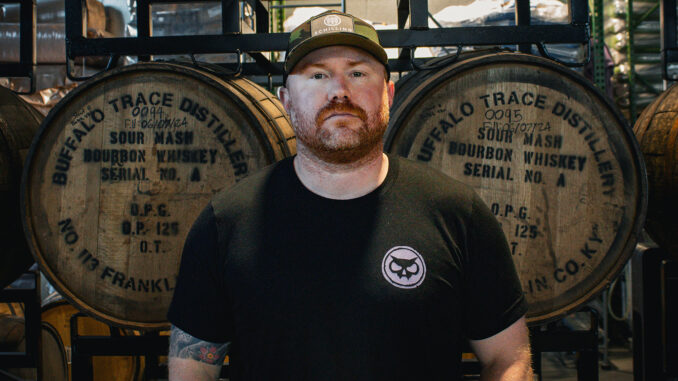
When Xül Beer Company co-founder Brad West jokes that the Knoxville brewery is in year 12 of a five-year plan that they never really created, it’s both a laugh line and a telling truth. Since opening in late 2020, Xül has rocketed from a pandemic-born startup to one of Tennessee’s most buzzed-about producers. Now, with another set of locations on the horizon along with a freshly acquired production facility, the Xülteam is navigating how to grow without losing the spark that got them here.
During our conversation, West briefly excused himself to field a call and “direct traffic” for ordering details at the new production spot — as another batch of the brewery’s fan-favorite PB&J Mixtape was underway.
The fruited sour with peanut butter flavoring has become an unlikely symbol of Xül’s rise: a playful, flavor-forward offering built on a hard seltzer base that attracts lines reminiscent of craft beer’s early hype era.
“I stood in lines in Florida for Tampa Bay beer week,” West notes. “I’ve stood in line for IPAs like Other Half or Side Project. I mean, that was before Xül, I was definitely doing that. Now people will come up to us and it’s always amazing.
“We go to these festivals and, and that’s what everybody (in the industry) talks about is, ‘I don’t know how you guys get these lines.’ Yeah, it’s cool. I don’t know, it’s still hard to believe.”
For West, Seth Thacker, and his wife Tara — the partners behind Xül — the journey from scrappy Knoxville startup to becoming a Tennessee “white whale” (and beyond) has been fast and improvised. The three met in 2018, united by a shared desire to do beer differently. By October 2020 — in the middle of the pandemic’s uncertainty — they opened their first taproom on 5th Street in a converted 60s-era car dealership and quickly gained traction with its dark branding ideas, 80s pop culture lean and high-quality Lagers, Hazy IPAs along with the innovative Sour and Stout programs.
The growth since then has been staggering. In June 2023, Xül added a Hardin Valley taproom in a former Casual Pint location. Less than two years later, they purchased the former Fanatic Brewing facility just north of downtown, doubling production capacity and securing dedicated space for special projects. That’s not to mention taking over the space occupied by a fellow brewery in the same building.
“It’s funny,” West recalled, “we added 90 barrels of production when we bought Geezers Brewing next door last year, and that capacity was gone almost instantly. So when Fanatic (Brewing, located just north of the brewery) came up again, we knew it was time.
“We’d looked at Maryville, at Round 6 Brewing’s old spot, but none of it made sense. Parking was bad, or the setup wasn’t right.”
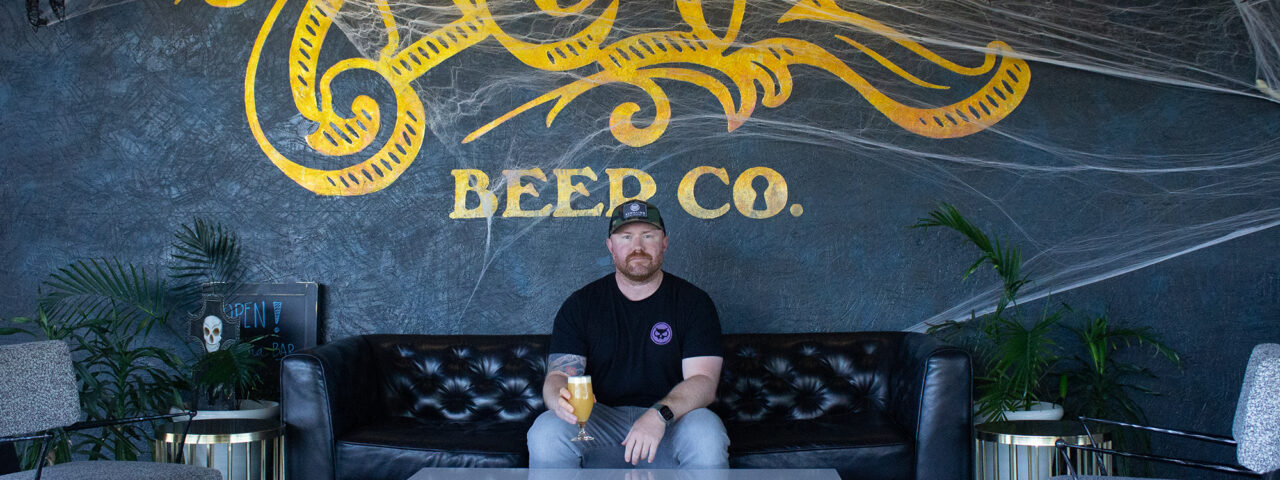
The Fanatic space was a good deal and perfect for what they needed: more PB&J Mixtape.
All of Xül’s sour beer production now lives in that new space, while the original facility focuses on its Lagers, IPAs, and Stouts.
Unlike many who dive into brewing driven purely by passion, Xül’s founders approached the industry with complementary business experience. West came from logistics and warehousing, having helped launch and grow a third-party logistics company in Knoxville in 2013. Seth Thacker brought years in event promotion and beer distribution — plus a sharp creative eye for design and branding. Tara Thacker, who was Xül’s first full-time employee, leveraged her retail management background to lead human resources and front-of-house operations.
That balance between creative energy and structured business thinking has been central to Xül’s sustainability.
“We’ve always said we’re probably more business-minded than brewery-minded,” West said. “Tara keeps our staff and operations tight. Seth drives the brand’s look and feel, everything visual that people associate with Xül. And I handle the financials, production schedules, and logistics. It’s a good mix.”
But that growth didn’t come without sleepless nights.
“When we opened, we had less than no money,” West quipped. “There were weekends where we’d say, ‘If we don’t open this weekend, we might not open at all.’ It was dicey. Now our bills are a lot higher, but the stress just changes form.
READ MORE: Inside Farmers’ 2 Strategic Expansion Ideas
“When something breaks, it’s not a $3,000 fix, it’s a $32,000 fix.”
That pragmatic awareness defines Xül’s current phase. Despite the brewery’s popularity and expansion, West remains grounded in the practical realities of business. Each move — from the Geezers acquisition to the Fanatic purchase — has been made carefully, with an eye toward longevity rather than chasing hype.
“We don’t want to grow for growth’s sake,” he said. “We want to grow in a way that lets us keep doing what we love, keep quality where it needs to be, and give people a reason to show up and be excited.”
Even as Xül Beer enters what West half-jokingly calls “year 12,” the founders’ original motivation still drives every decision.
Right now, Xül is in the process of acquiring Southern Grist where they will operate both taprooms & the production facility in Nashville. It’s a move that would expand Xül’s footprint into one of Tennessee’s most competitive beer markets.
The deal, which West described as “exciting, stressful, scary, and tiring,” is not yet finalized but is on track late in 2025 after some early hurdles.
West said he was first approached in April by Southern Grist’s co-founder, Kevin Antoon, during the Irie Jungle festival hosted by Tripping Animals Brewing in Florida. What started as casual conversation quickly turned into a proposal that surprised West.
“He said, ‘What do you think about buying Southern Grist?’ I was totally taken aback,” West said. “They were one of our inspiration brands. They were doing this stuff long before we were. For them to ask us to take over their brand — it was really cool.”
The two companies have spent the past several months working through logistics and creative terms. West said Xül plans to take over both of Southern Grist’s Nashville taprooms and its production facility.
“We’ll keep everything as is for now,” West said. “All the staff will stay, and Jared [Welch], one of the Southern Grist owners, will come on board to run Nashville operations.”
In the short term, Xül plans to gradually transition the spaces to reflect its own aesthetic and experience.

“We can’t just slap our name on it and call it Xül,” West said. “If you’ve been going to Southern Grist for years, that would just feel weird. We’re going to reface both taprooms, with all new furniture, fixtures, and look. It has to feel like Xül.”
The first renovation will take place at the Nations location in West Nashville, which West said is smaller and easier to update. That taproom will likely close for two weeks for remodeling before reopening under the Xül Beer name. The East Nashville location will follow soon after with a similar refresh.
While Xül will take full ownership, West said the Southern Grist name won’t disappear completely.
“We’re keeping the brand alive as kind of a legacy thing,” he said. “We’ll probably add a legacy badge to the logo, and we’ll continue to release Southern Grist beers every couple of months — their Stouts, their Hill series, some of the IPAs and sours people love.
“It’ll say brewed by Xül Beer, but it’s our way to honor what they built.”
The Xül team plans to release a video conversation featuring both ownership groups to explain the vision and address public questions. An FAQ will follow on social media and both breweries’ websites.
“There’s still a lot of unknowns,” West said in mid-September during the interview. “We want to be transparent and answer what we can as we move forward.”
The acquisition would make the Nashville production site Xül’s third active brewing facility, joining its original Knoxville brewery and the former Fanatic space.
Looking beyond Nashville, West said Xül’s ambitions stretch further. The brewery already distributes to Florida, North Carolina, and Pennsylvania, and he sees potential for expansion in other states — particularly Florida.
“We’re already kind of regional,” he said. “We send to Florida all the time, and it’s a massive market for us. I could see us having a taproom in Orlando eventually. This taproom model, that’s where we can really be successful.”
West said Xül was never created to play it safe. The partners had been talking beer for years, meeting through bottle shares and trading sessions, before deciding to take the leap.
“We came up with the name Xül in February of 2019,” West said. “We looked at this building the same week, and the landlord was awesome about it. This was the only building we even looked at.”
That sense of decisiveness set the tone for how Xül would grow. Getting started wasn’t easy.
“We went to several banks and just kept getting rejected by everybody,” West said. “A lot of breweries were failing. We didn’t come from other breweries, and we didn’t have a track record.”
Eventually, Simmons Bank out of Arkansas took a chance on them through an SBA loan.
By the time funds were approved, the world had shut down.
“We purchased equipment two weeks before COVID hit,” West said. “So we said, ‘We’re doing this now. Can’t really back out.’”
Despite the odds, their buildout took only five months. The much larger patio came later, finishing in early 2024, but the foundation of the brand was already there, West said.
From the beginning, West’s goal wasn’t just to open a brewery. It was to make Knoxville a beer destination.
“Everybody goes to Asheville or Nashville for beer,” he said. “There’s some excellent beer here, but when you visit places like Other Half, Side Project, The Veil, Angry Chair … you see what’s possible. That was the inspiration. We wanted to make beer that could stand with the best in the world.”
Though some early visitors associated Xül with its heavily fruited sours, West is clear: “We were not a sour brewery.”
The team’s first awards came from hazy IPAs, taking gold at the 2022 World Beer Cup and bronze in 2023. Still, the brewery’s experimentation with fruit-forward beverages led to one of its biggest hits: PB&J Mixtape.
What began as a one-off release quickly turned into a phenomenon. “The first time we did PB&J, it took a week to sell 100 crowlers,” West said. “The next time it sold out in a weekend. Then we canned it and had 80 cases gone in three days, then 160 cases gone in two, then 320 cases in a couple hours.”
The brand now inspires full-blown release days that bring out throngs of fans that move thousands of cases in hours.
The secret, West said, was learning to adapt.
“We started with kettle sours, then switched to souring in the tank, and eventually realized people didn’t care if it was technically ‘sour.’ They just wanted something that tasted good.”
That shift led them to develop a gluten-free sour line — drinks built on a sugar base and post-acidified with citric or phosphoric acid for balance. The results are fruit-forward, clean and distinctively Xül.
At any given time, the brewery has seven to nine different “sours” on tap, creating two new ones every week.
“It keeps people engaged,” West said. “We don’t want to be the brewery that says, ‘This is what we make and that’s it.’ We’d rather evolve with what people are drinking.”
That flexibility has made Xül both fast-moving and resilient. That spirit has carried the brand far beyond East Tennessee. PB&J Mixtape recently landed at Universal Studios’ Halloween Horror Nights, exposing a new national audience to Xül’s creativity. Still, West remains focused on maintaining scarcity and quality at home.
“We don’t distribute cans of PB&J anywhere in Tennessee,” he said. “We send draft out everywhere, but cans stay in the taproom. The taproom business is what allows us to keep doing everything else.”
As Xül continues to evolve and grow, its success stands as a way to show that bold experimentation and business discipline can coexist. What began as a risky idea during uncertain times has become a model of how other new breweries can grow by adapting quickly and staying true to creative instincts.
1 Trackback / Pingback
Comments are closed.