
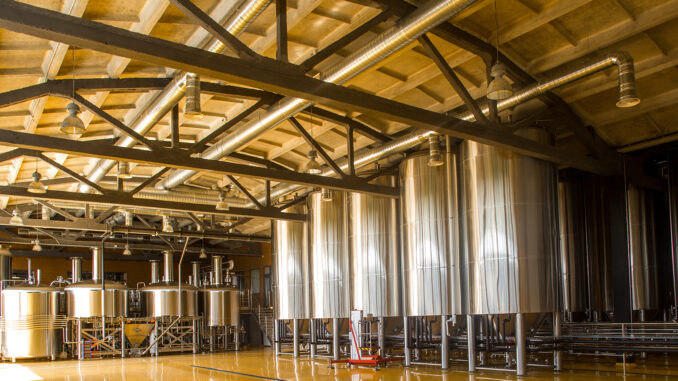
In a recent discussion, a brewery owner described the moment expansion “looked perfect on paper” and still unraveled within months.
This plan seemed solid at the production level: add a second taproom, move more profitable beers in-house, and treat the added space as an obvious next step. But within half a year, cracks showed.
“We always outsourced our food. We had trouble maintaining that, maintaining consistency,” they said.
Even their original taproom began slowing at the same time. On top of higher rent, long weekly drives to restock beer, and the strain of trying to staff a distant site, the numbers stopped making sense.
The experience forced a tough but pragmatic decision.
“I just put my ego aside and said sometimes it’s not a failure, sometimes it’s just bad timing,” they said during the panel discussion that was shared with anonymity.
They worked with the landlord to transition out of a long lease and refocus on the brewery’s flagship operation, a spot with a loyal following that the second site never matched.
Another brewery owner said early expansions inside their original building worked well. Adding square footage paid for itself and strengthened the core operation. But moving into other farther away restaurant spaces became a different equation. One taproom in a small commercial district had potential, but a partner who was supposed to run it stepped away almost immediately.
“About six months in, he decided he was not interested in running a restaurant,” they said. That left them driving nearly an hour each way to manage a space that was only marginally profitable.
“It wasn’t losing money, but it wasn’t profitable enough to overcome the stress,” they said.
After repeatedly making the trip, sometimes “three times in one day,” they exited the lease and shut it down.
A later expansion, built around a themed concept in a growing neighborhood, launched strongly. Then traffic flattened without warning. Support from the original taproom’s customers faded, and local turnout never reached projections. The owner pointed to multiple possible factors: the concept, the neighborhood, and the broader downturn after the pandemic. The closure was costly but manageable.

“At this point,” they said, “we are done expanding restaurants.”
Not every story in the discussion involved closures, but the successes shared a theme: patience, scale and location aligned with brand identity. One owner said their team waited six years before seriously considering any additional site. They spent that time watching peers expand — sometimes well, sometimes poorly — and identified the pitfalls they wanted to avoid.
The first priority was right-sizing. Their original location was large and demanding, so future sites had to be the opposite.
“We wanted manageable spaces,” this owner said, describing new taprooms roughly a tenth the size of their main site. Fewer employees, lower overhead and simpler operations reduced risk dramatically.
The second priority was fit. One new taproom sat in an area where the team had personal roots and a built-in audience. Another was in a high-traffic tourist zone with a predictable customer flow. Both expansions were intentionally modest, with taprooms meant to “get back to the basics” of offering beer, not full restaurants with complex staffing and supply needs.
Even then, the owner acknowledged the limits of their bandwidth.
READ MORE: Key Sales Metrics to Zero in on for Growth Strategies
“There’s a lesson there, don’t stretch yourself too thin,” they said.
Across the conversation, these owners repeatedly returned to the same conclusion: expansion is not about chasing square footage or planting flags. It’s about finding spaces that match the brand, the customer base and the team’s actual capacity. The wrong location can drain time, money and energy faster than expected. The right one feels sustainable from day one.
“If it doesn’t fit, it won’t fix itself,” one owner said. “And when it stops making sense, you have to be honest enough to walk away.”

1 Trackback / Pingback
Comments are closed.