
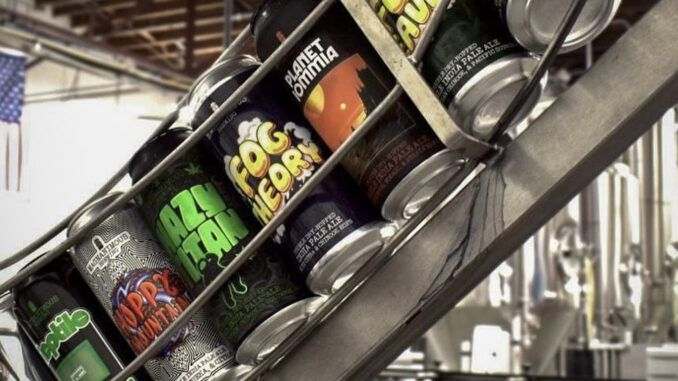
When Magnanimous Brewing opened its doors in Tampa in October 2020, the founders committed to offering nearly every beer they brewed in both 16 oz cans and kegs, with much of their volume going into their taprooms and a portion out to distributors. Over time, those dual channels exposed a common tension for a brewery owner: customer demand for variety and familiarity, and the hard arithmetic of profitability.
Michael Lukacina told Brewer that they’ve never formally “retired” a flagging brand purely because of profit pressure. Instead, when a beer fades from the lineup, it’s often for technical or process-based reasons
“Not necessarily financially sustainable, but more process or technical reasons,” the brewery’s founder and presidentsaid. “Maybe a special release or collaboration called for a process change that we would not want to do on a normal day-to-day basis because it may affect work flow.”That approach reflects a balance of respect for process integrity and for customer trust. Rather than quietly kill off a once-beloved beer, they avoid overpromising ongoing production that could compromise consistency or strain labor. In doing so, they sidestep potential backlash that might come from sporadic releases or uneven quality.
Still, profitability remains front of mind. Lukacina explains that they rely heavily on their POS data and feedback from distribution partners to identify which SKUs deliver the strongest margins without having to scrap customer favorites.
“We rely on our POS system and data from our distribution partners,” he said. These tools allow Magnanimous to see in real time which products are moving and which are draining labor, tank time or packaging capacity relative to return.
They also think carefully about format and packaging. Since opening, every beer has been offered in 16 oz cans and in kegs (sixtel and half barrels), with taproom taps always available. Barrel-aged or otherwise limited beers tend to remain taproom exclusives as a strategy that both maximizes margin and preserves specialness.

“Tap room exclusives are mainly Barrel Aged beers due to the limited nature of the product,” Lukacina said.
Looking to thread the needle between what customers want and what the books need, Lukacina offers practical advice: aim for overlap in raw materials so that contracts can be negotiated and costs remain predictable, and source locally when possible to reduce freight.
He shared a method of “split-batch” brewing: pour a 15-barrel batch into two seven barrel fermenters, then treat each fermenter differently (with different yeast, hops, fruit, and such).
“This allows us to have two products out of one turn on the brewhouse and helps keep the tap list and inventory interesting with less effort,” he said.That tactic resonates clearly with lessons from our earlier look at taproom-first profitability. In that piece we noted that breweries that build strong taproom brands and manage their core offerings carefully can enjoy high-margin direct sales while using consistent recipes and reliable sourcing to reduce volatility.
By leveraging split batches and overlapping ingredients, Magnanimous is effectively harvesting added value from single brewhouse runs and being able to increase SKU count without proportionally increasing cost or complexity.

1 Trackback / Pingback