As ingredient costs rise and shelf space tightens, many craft brewery leaders across the country have told BREWER that they are finding that survival is less about a single tactic and more about a disciplined mix of adaptability, financial rigor and community connection.
While tactics differ, the underlying strategies converge. You can see that adaptability without discipline can become reactive and financial discipline without innovation can stagnate. Even having great product quality without real community connection can struggle to sustain loyalty in a crowded market.
The breweries best positioned to navigate ongoing cost pressures and shifting demand are those treating their business model as an ecosystem. Things like financial planning, product excellence, team culture and customer relationships are not separate initiatives, but instead all must be managed together.
“My approach has always been to stay adaptable and make decisions with an eye toward future opportunities,” said Craig Nargi of Stable Craft Brewing, noting that having plans ready to pivot quickly has become essential in a volatile market.
That volatility, he argues, is being shaped in part by external pressures.
“We’ve seen a trend where larger beer companies influence craft breweries to create lighter beers and staples, which often shifts consumer focus back to price rather than the craft experience,” Nargi said.
Rather than chasing that race to the bottom, his Waynesboro, Virginia brewery leans into differentiation.
“To remain relevant, we prioritize our product quality, the atmosphere we create, and the relationships we build with our community,” he said.
That emphasis on relationships shows up consistently among breweries that have weathered recent economic pressure. At Meanwhile Brewing in Austin, owner and brewmaster William Jaquiss says it’s a long-term play.
“Our strategy has always been to focus on the long term — building something sustainable and meaningful that resonates with our community and partners over time,” he said.
Jaquiss ties that directly to product execution.
“Another one of our core principles is quality,” he said, “and we believe that making the best possible beer is the foundation of everything we do.”
But quality alone, he suggests, isn’t enough without connection.
“By staying consistent in quality and innovation, we build trust with our accounts and our taproom guests,” Jaquiss said. “Those relationships allow us to work closely with accounts and to understand their changing needs.”
In an environment where rising costs can’t always be passed along cleanly, that trust becomes a buffer.
The growing importance of proximity (both physical and emotional for a consumer) is another shift breweries are navigating.
“Craft beer continues to become increasingly local, which is both a challenge and an opportunity,” Jaquiss said.
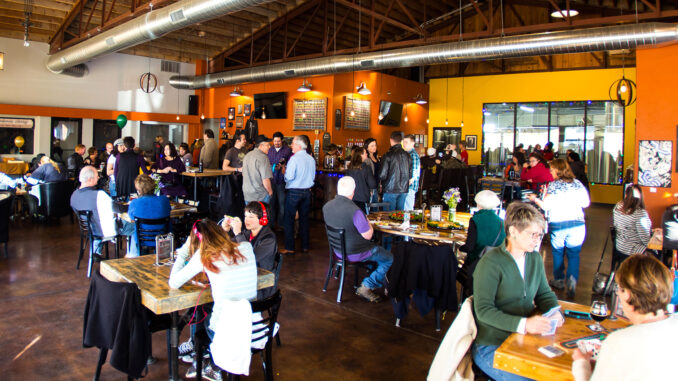
With distribution channels tightening, he sees the taproom as the center of gravity.
“Investing in the taproom is what allows breweries to build stronger, lasting connections with their guests and customers,” he said. “When guests leave with great memories and a sense of belonging, they become your advocates.”

Amanda McLamb, co-founder and CEO of Resident Culture in Charlotte, sees adaptability as a cultural practice rather than a reactive measure.
“One of our company’s core values is innovation,” she said. That philosophy extends beyond product development into sourcing and partnerships.
“Our entire team strives to continue to evolve, which includes sourcing alternative products, learning about new partnership opportunities, and being willing and flexible to adjust our offerings.”
McLamb argues that the industry’s collaborative nature has helped breweries navigate shared challenges.
“We are so lucky to be in the craft industry, where everyone shares their mistakes, hardships and resources,” she said, adding that setbacks often provide the most actionable insights. “I firmly believe that in every failure, there are critical learnings that will inevitably make us better.”
Even as consumer preferences shift, she doesn’t view change as a threat so much as a constant.
“I don’t believe the craft beer world has ever stopped evolving,” McLamb said.
READ MORE: Leadership by Listening: The CXO Strategies Jen Briggs Sees for Karl Strauss’ Next Chapter
While acknowledging enduring demand for classic styles, she ties relevance back to execution and curiosity.
“We should never stop learning, trying new things and seeing where the mistakes and growth take us,” she said.
For Sean Lawson of Lawson’s Finest Liquids, resilience has come from a more structured approach.
“We’ve always planned methodically for the present and the future, with a strong focus on our balance sheet and P&L statement,” he said. That discipline includes building a cash reserve, investing in people and maintaining strict quality standards.
“We’ve never compromised on the quality of our beer and our cold-supply chain commitment, and we’ve remained true to our core values,” Lawson said, adding that those principles have helped the brewery navigate everything from the pandemic to a “hyper competitive marketplace.”
Lawson points to structural shifts in the broader alcohol landscape as one of the biggest challenges. “The biggest change I’ve noticed is the proliferation of so many different types of packaged alcoholic beverages,” he said.
Combined with the growth from roughly 1,500 breweries in 2008 to nearly 10,000 today, the result is intense competition for attention.
“It’s increasingly difficult to get shelf space, as what’s allocated to craft beer has shrunk,” Lawson said.
In response, Lawson’s team has leaned into brand strength and strategic placement. He credits both internal execution and consumer advocacy for helping the brewery expand into new chain and grocery accounts.
“These placements are very difficult to get,” he said, noting that consistent demand for flagship products has helped open doors.