
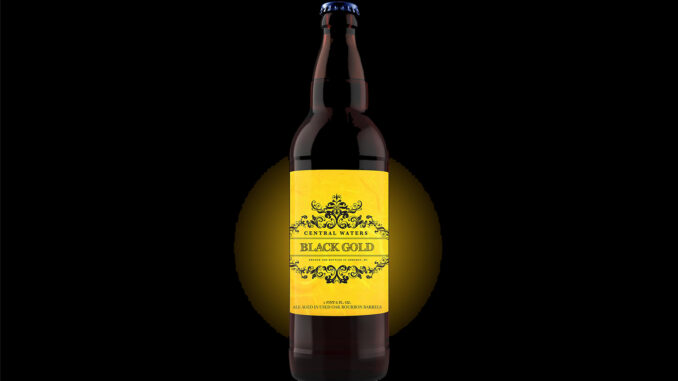
By the time Black Gold reaches the public each October, it has already spent three years quietly shaping Central Waters’ business in ways that go far beyond the stout itself.
The Bourbon barrel-aged Imperial Stout has become one of Wisconsin’s most sought-after beers, but Anello Mollica, co-owner of the Amherst-based brewery, frames the beer’s impact less in hype and more in how it expanded what the company was able to attempt operationally and strategically.
“Barrel aging has been a part of the Central Waters identity since 2001, and Black Gold is certainly a hallmark of that,” Mollica said. “We release at least six different barrel-aged beers a year to distribution, plus numerous others as brewery-only offerings.
”The popularity of Black Gold really does allow us to play in more spaces, and helped us develop our reputation over the years.”
That reputation now extends beyond beer. Mollica said the credibility built through Central Waters’ barrel-aged portfolio directly contributed to the brewery launching its own spirits line. “We now have launched an actual Bourbon, and it’s that popularity of Bourbon barrel-aged beers that has opened the door for that opportunity,” he said.
Black Gold’s origin traces back to Central Waters’ first anniversary beer, 1414, which won a gold medal at the Great American Beer Festival. Rather than moving on, the team chose to push the concept further.
“We originally released this beer in 2013,” Mollica said. “It was a continuation of our first ever Anniversary Release. That beer won a gold medal, and we aged it a further year to hit a full three years aging, and called it Black Gold.”
From the start, the beer was tied to a place and event. The initial release coincided with Lettie’s River Run, an annual charity event hosted by the brewery that still begins and ends at Central Waters. Black Gold remains a brewery-only release, sold once a year in limited quantities, a decision Mollica said was validated almost immediately.
“After the initial release in 2013, the feedback was clear — we needed to make this an annual release,” he said. “Since it ages for three years, and continues to be the previous year’s anniversary beer aged an extra year, we control how much we produce based on demand.”
That long aging cycle forced Central Waters to think differently about forecasting. Planning production three years in advance, Mollica said, was one of the earliest challenges.
“At the start, it was difficult to try and plan three years ahead for a demand that we had no idea where it would be,” he said. “Over the years, we have a pretty good idea of what to expect, and make what we think we will need.”
Mollica credits timing as a major factor in Black Gold’s connection with drinkers. “We launched this beer during the heyday of barrel aging success,” he said. “This was one of the first barrel-aged beers available to the consumer with this long of an age statement, so we helped pioneer that category for many years.”

Price also played a role.
“Staying true to our ethos that beer should be an affordable luxury, we keep the price of this beer at a reasonable amount,” Mollica said.
Each release features a different recipe, though the core profile remains consistent: a deep black pour with aromas of dark chocolate, roasted coffee and vanilla, followed by flavors of bittersweet chocolate, espresso and caramel, rounded by bourbon warmth and oak. The combination of variation and familiarity has helped sustain interest year after year.
Despite its cult following, Black Gold represents only a small fraction of Central Waters’ total production. Mollica said its success is measured differently than year-round brands.
“On the grand scale of our overall production, Black Gold is a very small portion of that, as it is only released once per year in limited quantities,” he said. “That’s part of what makes it unique.”
The beer’s influence has extended into collaborations and adjacent industries. Central Waters has partnered with other breweries on barrel-aged projects, and Mollica said the brewery even sent used Black Gold barrels to a distillery to finish whiskey.
“All of this is largely built off of the success of our barrel-aged beers over the years,” he said.
READ MORE: Customer Service Unmatched with ProBrew
Marketing has been deliberately restrained as well.
“We have never marketed this beer outside of social media and our website,” Mollica said. “So much of our history involved guerrilla marketing tactics. Our fans are the ones that make this popular by word of mouth.”
Mollica downplays branding decisions, though he acknowledges the name resonates.
“The name is great — a dark, rich stout named Black Gold just fits,” he said. “Ultimately, the time it takes to make this beer, the rarity of it, and the flavor profile is what makes it successful.”
Black Gold offers a case study in how a single, tightly controlled release can shape brand perception, unlock new business avenues and reinforce long-term identity even if it never becomes a volume driver.


Be the first to comment