
For many brewpubs, customer feedback has shifted from an occasional check-in to a real-time operational tool that can influence everything from beer menus to staff training. As competition tightens and taproom margins remain under pressure, many are increasingly formalizing how they collect, interpret and act on guest input, treating feedback less as anecdote and more as data that can guide daily decisions.
At Wynkoop Brewing in Denver, Head Brewer Kat Hess takes a deliberately hands-on approach.
“When it comes to customer feedback, I do much of my administrative work at or near the bar. That allows me to hear guests’ thoughts and opinions about our beer in real time,” Hess said.
She told Brewer that stepping behind the bar to bus tables or pour beers creates additional opportunities for direct interaction, adding that while she monitors reviews on Yelp, Google and Untappd and occasionally responds on Untappd, in-person conversations remain the most valuable source of insight.
That emphasis on immediacy extends beyond face-to-face interaction for many breweries, which are pairing personal observations with structured digital tools to capture patterns at scale.
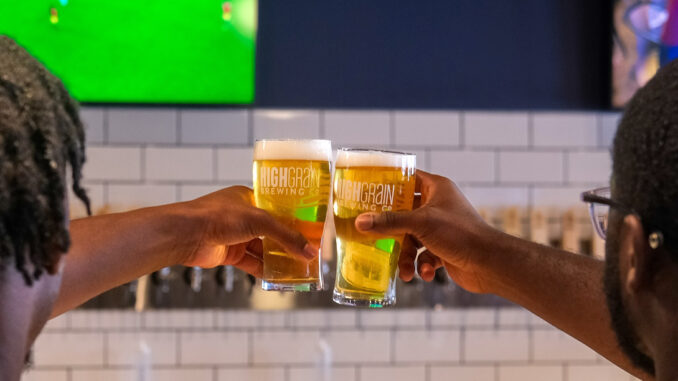
At HighGrain Brewing in Cincinnati, feedback comes from a mix of beer-specific and hospitality-focused platforms. Marketing Director Austin Neal said the brewery relies on Untappd for beer reactions while Google, Yelp and Toast provide insight into the broader dining and taproom experience.
That combination allows the team to separate product issues from service or environment concerns and spot patterns quickly. Neal indicated that consistent feedback, particularly when it highlights friction in the guest experience, often leads to changes in processes or offerings rather than one-off fixes.
Barn Town Brewing founder Peter Faber said Toast plays a similar role for his team by offering real-time visibility into guest sentiment at the point of sale, supplemented by monitoring Google and other public review platforms. Rather than reacting to every comment, Faber said the leadership team looks for repetition.
“If we hear the same feedback over something consistently, then it’s time to change things up or give it some real thought and attention,” he told Brewer, “especially if it leans more toward the negative side of feedback.”

The goal, he said, is to distinguish between isolated opinions and actionable trends.
Both breweries emphasize intentional review monitoring, but with a measured response strategy. At Barn Town, the team regularly checks public reviews and decides whether to respond based on intent. Faber said the brewery avoids engaging with what appears to be negativity for its own sake, while making a point to respond when feedback is constructive or raises a legitimate concern. Responses may range from providing context to acknowledging an issue, depending on the situation.
HighGrain takes a more proactive approach to follow-up when a guest reports a poor experience. Neal said members of the marketing and general management teams monitor review platforms daily and will often reach out directly to customers who leave negative feedback.
“We reach out … to offer a resolution (like a gift card or a personal invite back) because we value the community connection,” Neal said.
Beyond external communication, both operations use guest feedback as an internal management tool. At HighGrain, positive mentions of staff members in reviews are shared during pre-shift meetings and through internal communication software, reinforcing desired behaviors and recognizing employees in real time.
Neal said those shout-outs help connect day-to-day service decisions to measurable guest outcomes.
At Barn Town, Faber said consistent feedback, whether positive or negative, is brought back to the team as part of ongoing efforts to improve consistency. Rather than treating complaints as isolated failures, the brewery frames them as opportunities to identify training gaps or operational blind spots. Faber said each piece of feedback reveals something about how the business can improve, and that perspective has helped the team use customer input as a driver for long-term performance rather than short-term damage control.
“Every positive and negative situation reveals an opportunity for us to get better,” he said.


This is a solid article — but it still treats feedback as something you listen to after the damage is done.
Most of the examples here rely on bar conversations, POS data, or public reviews. All useful — but all reactive. By the time a guest posts on Google, Yelp, or Untappd, you’ve already lost control of the experience.
The real opportunity brewpubs are missing is in-the-moment, private feedback via the guest’s own cell phone. When a guest can flag an issue instantly — slow service, a messy restroom, a confused ordering flow — staff can fix it before it turns into a negative review, a comped drink, or a lost regular.
Cell-based feedback isn’t just faster — it’s safer. Guests are far more honest when they’re not talking to a manager at the bar or broadcasting frustration publicly. That honesty gives operators something better than opinions: early warning signals.
If feedback only shows up after the guest leaves, it’s not a management tool. It’s a post-mortem.
If your first signal of a problem is in Yelp, you didn’t collect feedback — you collected evidence.