Innovation has seemingly become synonymous in craft beer only with constant new releases. But while consumers often celebrate variety, your brewery’s distributors are increasingly tasked with managing shrinking shelf space, retailer resets and portfolios that continue to expand. That reality is forcing breweries to ask a difficult question if offering more beers actually helps.
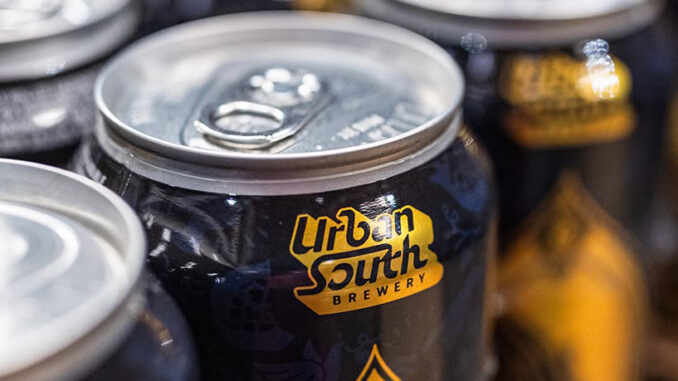
At Urban South Brewery in New Orleans, the answer has increasingly become no.
Rather than treating distribution as an opportunity to showcase every beer the brewery can produce, Urban South has developed a strategy built around restraint, planning and understanding how distributors operate. The result is a philosophy that prioritizes long-term wholesale success over short-term excitement. That approach begins with accepting a simple reality: every SKU has a lifecycle.
“We know when something is slowing down on a shelf, slowing down with our distributor,” said co-founder Kyle Huling during a recent cover story interview and podcast. “Before a Rouses or Walmart or Publix can cut it, we’re going to replace it with something else before a distributor calls us and says, ‘Hey, we don’t want to carry this brand.’ It’s like, ‘Oh, we’ve already made that decision for you.'”
Making those decisions proactively has become a way of demonstrating partnership rather than creating additional work.
“They appreciate that,” Huling said. “They appreciate that you’re looking out for their business, that you’re always trying to stay cutting edge and trying to evolve and make them more money as well.”
It’s a smart play. Instead of asking how many products can fit into distribution, the better question becomes which products deserve to be there today. Retiring a beer can feel like admitting failure. Yet Huling’s perspective reframes portfolio management as an ongoing business discipline rather than an emotional attachment to brands that may have outlived their effectiveness.
The Louisiana brewery’s willingness to make difficult decisions is rooted in another advantage: understanding the distributor’s perspective before asking for shelf space. Urban South’s sales leadership collectively spent decades working on the wholesale side of the industry, giving them firsthand experience with the operational challenges distributors face every day.
“We’ve got about 55 years worth of distributor employment experience,” said fellow co-founder Jacob Landry. “So our team really operates with a distributor-first mindset.”
That experience influences virtually every decision the brewery makes when entering a new market. Rather than arriving with an expansive portfolio, Urban South intentionally limits initial offerings.
“When we launch a new market, we launch with two, maybe three SKUs,” Landry said. “We know the distributors are cutting SKUs. We know they’re scared to bring on new brands. So we try to make it really easy.”
Instead of chasing immediate breadth, the brewery focuses on earning sustained velocity.
“We’re going to focus on these two, and three months later we’re going to roll in our seasonal,” Landry said. “Then we’re going to do a slow build over two to three years.”
Not every market needs every beer, he said.
“For most of our distributors, they’ll never carry our full portfolio,” Landry said. “We make things that you’re only going to find in Louisiana just because we can’t overwhelm them. Most distributors don’t want 12 SKUs from a brewery that’s three states away.”
That restraint extends beyond launch plans into annual business planning.
“They love that we go into our business plan meetings annually with a set plan,” Landry said. “This is what we’re doing for the next 12 months, and we don’t randomly throw a new seasonal at them or a new SKU three months into that plan.”
Consistency, he added, helps distributors allocate resources with confidence instead of constantly adjusting to surprises.
It may be uncomfortable for breweries built around frequent releases, but every new SKU carries hidden costs throughout the supply chain. Each additional product creates more forecasting complexity, inventory management, warehouse handling, sales training and retailer education. Urban South’s philosophy is to reduce that friction wherever possible.

“You’ve got to make your product simple to sell,” Huling said. “From the vice president of sales all the way to the guy delivering the beer on the truck.”
That philosophy extends well beyond the beer itself.
“Whether it’s the keg collar, it’s got to be very legible so that the guy picking it in the warehouse knows what to pick or pull it off the truck,” Huling said. “All the way to, ‘What’s the business plan for the year?’ And we’re going to stick to it.”
While breweries often concentrate on consumer-facing branding, distributors experience a brand through logistics, forecasting and execution. Every unnecessary complication slows the process.
“Make it simple,” Huling said. “Make their lives easy, and they’re going to sell your product for you.”
The brewery’s approach wasn’t developed in theory. It came from experience … and mistakes. When Urban South entered Mississippi, the company introduced a broader selection of beers into the market.
“Nothing had really truly grabbed hold of that market,” Huling said. “You go visit 20 accounts, and they all pick something different.”
Instead of moving efficient volumes of one or two products, inventory became fragmented.
“Instead of sending full pallets of one beer, you’re sending quarter pallets of five different beers,” Huling said.
The experience reshaped future expansion plans. When Urban South later entered Arkansas, it launched with just Holy Roller IPA and Paradise Park Lager.
“We really just wanted to get those brands established and off the ground,” Huling said.
Once those brands generated consistent volume, the brewery could layer in additional offerings with far greater confidence. Timing also became part of the strategy.
READ MORE: Data, Discipline and Paradise Park
“Line it up when resets happen for grocery stores,” Huling said, referring to the seasonal periods when retailers evaluate and reorganize shelf sets. “If you align with that, you get the commitment from the chain to put your products in there. From day one, you’ve got instant volume. That makes distributors really happy.”
The same disciplined thinking also influences what happens inside Urban South’s taproom. While visitors now see dozens of draft lines, only about half feature beers intended for broad distribution.
“We started with eight taps, and they were all variations of two beers,” Huling said.
Today, the brewery uses the remaining draft lines as a proving ground.
“About half of them are our distro beers,” Huling said. “The other 50% are constantly rotating. Some of it are trials for distribution beers that we are interested in releasing. Some of them are just fun beers that the brewers pitch and they want to make.”
Innovation doesn’t have to disappear simply because distribution becomes more disciplined. Instead, breweries can separate experimentation from wholesale execution, allowing the taproom to remain a creative laboratory while distribution focuses on products that consistently move through the supply chain.
Ultimately, Urban South’s strategy isn’t built around selling fewer beers. It’s built around making every beer in distribution more successful. By limiting initial SKUs, planning introductions months in advance, retiring underperforming brands before distributors ask and reducing operational friction throughout the sales process, the brewery has turned portfolio management into a competitive advantage.