
For years, craft beer rewarded excess, whether through extreme adjuncts, louder branding or constant reinvention. Yet, a growing number of leaders now say those impulses are losing power, and that several current trends are unlikely to survive a more cautious, competitive market.
Jason Bell, founder of Living The Dream Brewing, believes consumers are pulling back from beers designed to shock rather than satisfy.
“I think the days of extreme creativity and crazy beer additions have ended,” Bell said. He sees drinkers becoming more selective with their spending and less interested in rolling the dice on unfamiliar concepts.
“Rather than risking their hard-earned dollars on a crazy beer with all kinds of odd adjuncts, people want to rely on the beer they buy and know what they are getting,” he said.
That same fatigue shows up in how breweries chase attention, according to Chris Jacobs of Beer Zombies. The Las Vegas brewery founder argues that one of the most fragile trends in craft beer today has little to do with ingredients and everything to do with intent.
“The trend that won’t last is brewing for algorithms instead of people,” Jacobs said. He pointed to gimmicks such as glitter-filled beers, meme-driven IPA names and short-lived hype cycles that spike engagement but fail to build trust.
“It gets attention for a minute, but it doesn’t build loyalty,” he said. “Craft beer isn’t fast fashion.”
Jacobs pointed out that Beer Zombies still experiments aggressively, but only with purpose.
“We experiment like mad scientists, sure, but it’s never random,” he said. “Every beer still has a soul and a story behind it.”
In his view, longevity belongs to breweries that prioritize meaning over momentum.
“The breweries that survive long term are the ones that make beer that matters,” he said, “not just beer that trends.”
Several told Brewer that those instincts are colliding with a harsher economic reality that no longer tolerates casual decision-making. Chad Heath, beer division COO for Karl Strauss, framed it as a structural problem rather than a stylistic one.
“If you are running your company like a hobby, expect to fail,” Heath said. “This is a difficult industry to thrive in.”
He noted that while success is still possible, the conditions have changed dramatically.
“You MUST run your business like a business,” he said.

That need for focus is one reason some brewers are skeptical of chasing every adjacent category.
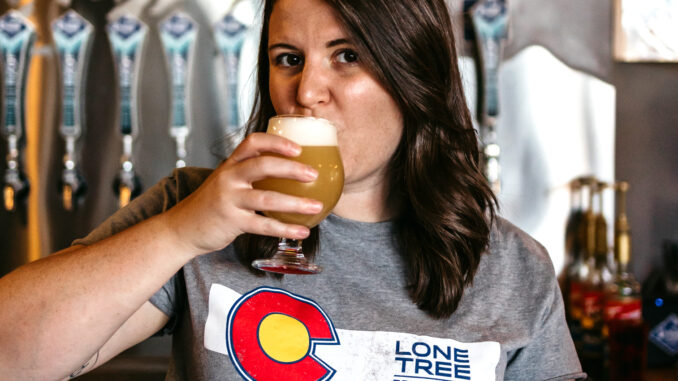
Jerry Siote, director of brewhouse operations at Lone Tree Brewing in Colorado, singled out non-alcoholic craft beer as a trend that may not endure for many small producers.
“There comes a time as a business, no matter how mature or young, when you philosophically have to come to grips with the product that you make,” Siote said.
Lone Tree, he explained, has chosen to center on full-strength beer, even if that limits its audience.
“We make full-strength craft beer,” he said,”which isn’t for everybody.”
Siote contrasted that approach with the pressures facing larger players.
“Large macro breweries have the capital to address this sector, and do it well,” he said, adding that investor expectations often require them to pursue every opportunity regardless of fit.
For smaller craft producers, he warned, constant diversification carries a cost.
“It takes a long time to get good at anything … a really long time,” Siote said. “If craft beer producers continue to be distracted by everything else that is not craft beer, we’re doing a disservice to our art and to the customer’s experience.”
Pricing strategies are also under scrutiny as breweries search for volume.
Ryan Bandy, chief business officer at Indeed Brewing, said he worries about the long-term viability of ultra-cheap craft Lagers.
READ MORE: What Any Brewery Owner Can Learn from Revolution’s Territory Strategy
“Sure, it comes with volume that can look good in the sales numbers,” Bandy said, “but I think that price point comes with all types of massive challenges for smaller breweries that’ll be hard to sustain.”
He questioned whether competing primarily on price undermines the very idea of craft.
“At that point, we’re turning our beer into a commodity,” he said. “I don’t think those brands or breweries will ‘last,’ so to speak.”
Operational trends inside taprooms may pose similar risks. Wesley Keegan, founder and sole owner of TailGate Brewery, cautioned against breweries expanding into full restaurant service without the right foundation.
“People opening restaurants that never wanted to be in hospitality,” Keegan said, is a pattern he sees repeating.
While food can be essential to modern taprooms, he warned that the combination can be dangerous.
“We’re asking people who go into manufacturing to get into customer service,” he said. “Compound one terrible industry with arguably the worst industry — restaurants — and it’s going to be scary when the wrong people dive in to chase a trend.”
If a trend is built on novelty, then shortcuts or misalignment are unlikely to endure. As margins tighten and competition intensifies, many in the craft beer segment say survival will depend less on following the next big thing and more on clarity, restraint and a willingness to double down on what a brewery can do well. And that’s even when the industry’s attention is pulled elsewhere.
1 Trackback / Pingback
Comments are closed.