The U.S. craft brewing industry contracted in 2025 in a report released April 14 (and edited May 29) by the Brewers Association, but nearly 40% of breweries reported stable or increased production, underscoring a widening divide in performance and highlighting the growing importance of hospitality-driven business models.
Total craft beer production declined 4% in 2025, according to the newly released annual data, as broader beer category softness continued to weigh on the industry. Still, 39% of breweries reported growth and 1% held steady, meaning roughly two out of five breweries avoided declines despite challenging market conditions.
Craft brewers also slightly increased their share of the overall beer market, rising from 13.2% to 13.4% by volume, while total beer volume fell 5.7%. The modest gain reflects continued consumer demand for independent breweries even as overall consumption trends softened.
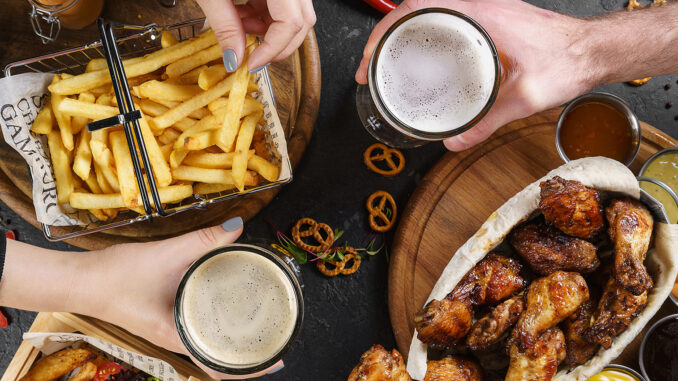
The data suggests that while overall production declined, breweries that diversified beyond beer — particularly those emphasizing food, service and hospitality — were better positioned to navigate shifting consumer behavior and a more competitive marketplace.
“The industry outlook points towards cautious optimism, as shifting trends offer hope for a more stable path forward after several challenging years,” BA staff economist Matt Gacioch said in a release. “While it’s probably premature to say the industry has settled into a ‘new normal,’ there are many indications that we are moving in that direction.
“What’s nearly guaranteed is that success going forward will come down to creating something meaningful and memorable for consumers. Breweries that deliver consistent quality, human connection, and unique experiences will stand out.”
Among business models, brewpubs proved the most resilient segment, posting a 1.7% overall decline. That is significantly smaller than losses among taprooms, which declined 3.9%, microbreweries at 8.9%, and regional breweries at 4.1%. The comparatively strong performance of brewpubs shows a shift toward hospitality-focused operations where food, service and on-site experiences play a larger role in attracting consumers.
Retail dollar value for craft beer declined 2.8% to $28.0 billion in 2025, but the drop was less severe than the production decline, reflecting higher average prices and increased on-site consumption. Brewpubs and taprooms typically command higher per-unit pricing, which helped stabilize revenue even as overall volume fell.

Craft maintained a 24.8% share of total beer retail dollar sales, essentially unchanged from the prior year, signaling continued stability in the segment despite ongoing headwinds.
Employment in the craft brewing industry declined by about 6,000 jobs to 191,000, a 3% drop year over year. Employment trends held up better than production, however, due in part to the labor-intensive nature of hospitality-focused brewery models, which generally require more staff per barrel produced.
The total number of operating craft breweries fell 2.9% to 9,578 in 2025, reflecting a maturing market and slower growth. New brewery openings dropped to 300, down from 518 in 2024, while closures also declined to 481 from 591 the prior year. The slowdown in openings signals fewer untapped markets and increased competition for new entrants.
Brands with strong identity and clear positioning continued to outperform broader market trends, while hospitality-driven models remained comparatively resilient, particularly those offering differentiated value to cost-conscious consumers.
Looking ahead, there is cautious industry optimism as breweries increasingly focus on experience-driven offerings that combine beverages with food and hospitality.