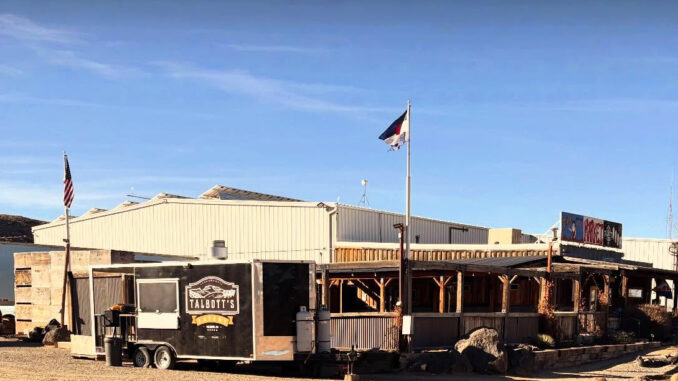
For Talbott’s Cider, adding food to its taproom was not initially about becoming a restaurant. The goal was much simpler: meet a licensing requirement, give guests another reason to stay and, ideally, sell another cider. Instead, the food program quickly became a meaningful part of the cidery’s business.
Charles Talbott, co-founder of Talbott’s Cider in Palisade, Colorado, discussed the evolution of the company’s food program on a pervious edition of the Cider Business Podcast. What began as a way to meet a 14% on-premise food-sales requirement has grown into a revenue stream that now accounts for 32% of the taproom’s overall revenue.
The experience offers a useful lesson for other cideries considering food: The opportunity may be less about becoming a restaurant and more about creating a reason for customers to stay longer while building an offering that fits the cidery’s existing identity.
Start With the Business Objective
Talbott’s decision to add food was tied initially to Colorado’s licensing structure. The company moved from a limited winery license to a restaurant license, allowing it to serve beer, wine and spirits as long as 14% of its on-premise sales came from food.
At first, that percentage was essentially the goal. Talbott said he and his brother, Joe, who handles distribution and sales, initially viewed food as a way to satisfy that requirement while increasing customer dwell time.
“If we can hit that 14%, but we can get people to stay and just have another drink, then for us it’s worthwhile,” Talbott said.
That is an important starting point for others considering a similar move. Food does not necessarily need to be evaluated solely as a standalone profit center. It can also influence how long customers remain on-site and how much they spend while they are there.
But Talbott’s quickly discovered that its original benchmark was too conservative.
“We want to use it as a consumer education platform,” he said.
Talbott added that the company had already exceeded its original expectations, with food accounting for 32% of the taproom’s overall revenue after only a few months of operation. That forced the company to rethink what success should look like.
“At this point, I think we’re moving to more, if we can run a 40% food here on the premise, and we can have a margin that’s over 30 to 40% on it, we’re happy,” Talbott said.
The important business lesson is not that every cidery should target a particular percentage of food sales. Rather, Talbott’s experience demonstrates how a new revenue stream can change the financial equation quickly enough that the original goal becomes obsolete.
Make the Food Fit the Cidery
Talbott’s did not build its food program around whatever menu might have been easiest to operate. The company and its owners started with the region.
“We sat down and talked about what type of food we can do that really represents Western Colorado, represents our area and what we grow well around here,” Talbott said.
That led to a Southwest-inspired menu, including items such as empanadas and sliders. The concept also gave the cidery opportunities to incorporate its agricultural connections, including Colorado-grown apples, peaches and other fruits and vegetables.
“We’re basically doing Southwest food with our own twist with fresh fruit and vegetables from what’s grown around us in Colorado,” Talbott said.
That connection between food, agriculture and cider is more than a branding exercise. It gives customers another way to understand what makes the business different. Talbott said the increasingly competitive beverage market makes differentiation and quality especially important.
“If you’re going to produce anything, you need to do it well,” he said. “I think in this day and age, the brewing industry is becoming more and more competitive.”
He added that the food program needed to balance regional identity with a price point that would encourage locals to visit rather than making the taproom primarily a destination for tourists. That consideration is particularly relevant for cideries located in tourism-heavy markets. A food program can support the visitor experience, but a menu that is priced beyond what local customers will regularly pay can undermine the repeat business needed to keep a taproom healthy outside peak tourism periods.
Use the Supply Chain to Protect the Margin
The food program also created an opportunity for Talbott’s to leverage relationships it already had within agriculture. Food costs, Talbott said, are more difficult to manage because they change consistently. His response has been to work directly with farmers and use the company’s existing position as a wholesaler.
“Basically what we’re doing is we’re cutting out that second tier of distribution and we’re going directly to the farm,” Talbott said.
That relationship can benefit both sides. Farmers receive more than they might through another wholesale transaction, while Talbott’s can secure ingredients at a better price. Talbott offered Colorado corn as one example, saying he was purchasing it for 50% less than corn he had previously sourced from California.
The company also handles some preparation in-house.
“We are hands-on family farm and so a lot of these tricks and trades, we already do it,” Talbott said. “We don’t need to pay someone else to do it.”
The broader takeaway is that local sourcing should not necessarily be viewed only through the lens of sustainability or storytelling. Existing agricultural relationships may also create opportunities to improve purchasing economics, reduce intermediary costs and find additional uses for ingredients and skills already present within the business. The caveat is that in-house production is not automatically cheaper. Labor, equipment, storage and food-safety requirements all carry costs. The value comes when a cidery has the relationships, infrastructure or expertise to make those activities economically worthwhile.

Food Did Not Push Cider Aside
Perhaps the biggest concern could be adding other beverages or food is whether the new offerings will dilute the core product. Talbott’s has not seen that happen. When the company began adding beer, one of its concerns was that beer could take sales away from cider. Instead, Talbott said cider remains overwhelmingly the most-consumed beverage at the taproom.
“Cider is still predominantly the most consumed thing here by, I mean, almost 70% hard cider over anything else,” he said. “Beer is about 28%, wine about two.”
That distinction matters.
Talbott’s did not add food because it wanted to stop being a cidery. It added food and other beverage options to make the destination more useful to a broader group of customers while maintaining cider as the center of the experience. The same philosophy appears in the way the company approaches its regional partnerships. Talbott’s serves Colorado beer and is working toward a tap list focused on collaborations, including fruit-focused beers that connect back to its agricultural identity. The goal is not simply to have more products.
Talbott described the larger strategy in terms that go beyond cider sales: “We are focusing more on selling a farm experience than we are just selling products.”
That may be the most important lesson from the food program.
The Revenue Stream Has to Reinforce the Core Business
Adding food can create another revenue stream, but it also creates another operation to manage. The strongest case for doing it, then, may not be simply that food can generate sales. For Talbott’s, food gives customers another reason to visit, another reason to stay and another way to interact with the agricultural story behind the cider. And the financial results suggest those objectives can work together.
Talbott said that, on average, customers who order food purchase one or two additional drinks. The food therefore has value beyond its own sales, potentially increasing beverage revenue while extending the customer’s experience. That is a more useful way for cideries to evaluate a food program than asking only whether the kitchen itself is profitable.
The questions become broader:
- Does food increase dwell time?
- Does it generate additional beverage purchases?
- Does it attract local customers who might otherwise not visit?
- Does the menu reinforce the cidery’s identity?
- Can ingredients be sourced at a price that supports the desired margin?
- Does the additional revenue justify the labor and operational complexity?
Talbott’s experience suggests the answers can change after a program launches. What began as a licensing requirement and a way to encourage one more drink became 32% of taproom revenue in a matter of months. The lesson is not that every cidery needs to become a restaurant. It is that a carefully designed hospitality addition can become considerably more valuable when it is built around the business a cidery already is — rather than trying to turn the cidery into something it is not.