
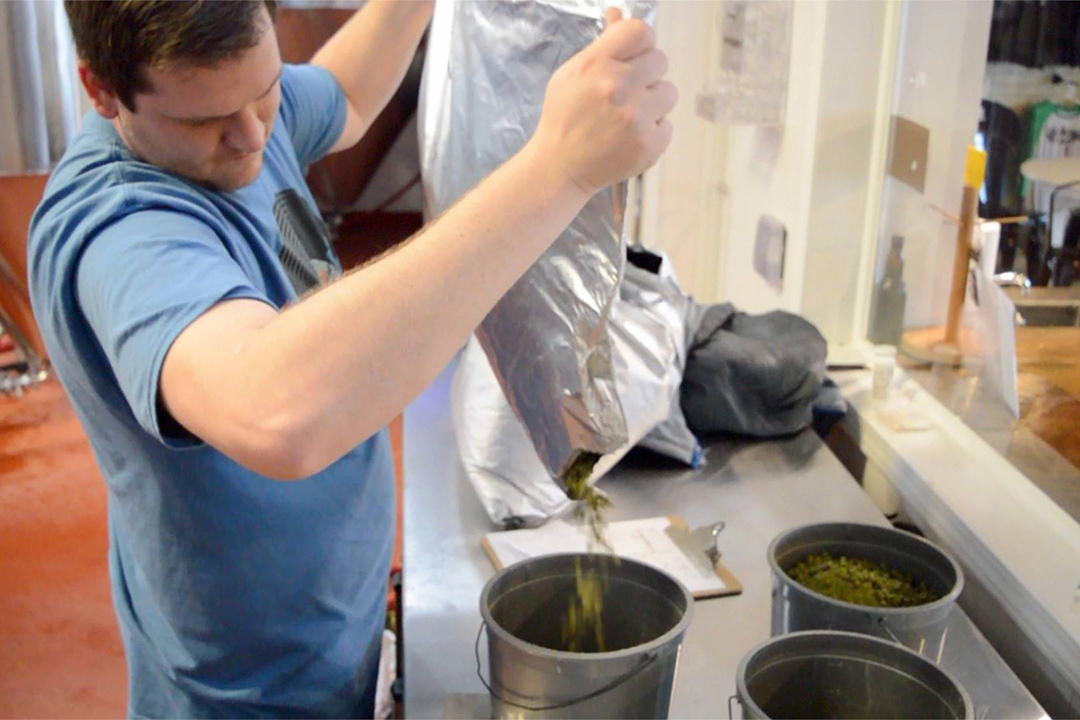
Ingredient costs and supply chain volatility continue to test the operational discipline of breweries, forcing owners and managers to rethink how and where they source raw materials that can help define their brands. While many see opportunity in localized purchasing, most say the future of sourcing will likely remain a careful balancing act between authenticity, economics and collaboration.
For some breweries, the tension begins with the simple reality that beer styles often dictate geography. Jason Bell, founder of Living the Dream Brewing, says the pursuit of classic, high-quality beer styles inherently pushes breweries into the global marketplace.
“Great beer can be made from local ingredients,” Bell says, “but there is a trade-off with regards to style, quality and authenticity.”
Of course, while local sourcing carries marketing and community benefits, it can also introduce constraints that many style-driven breweries are unwilling to accept.
That reality is echoed by Jerry Siote, Director of Brewhouse Operations for Lone Tree Brewing, who frames sourcing as part of a much larger global system. He tells Brewer in a recent email that craft brewing “is a global business” and warns that long-term protectionism rarely benefits brewers. Even as climate pressures shift some hop sourcing domestically, Siote says customer expectations still require international supply chains. Buying local remains a priority, he said, but larger production breweries must pursue economies of scale, often in regions with cost advantages, to remain competitive.
Where breweries do see room for evolution is in how they work together. Ryan Bandy, CBO at Indeed Brewing, believes the industry has underutilized its collective buying power. He questions why clusters of breweries using the same base malt are not coordinating purchases to secure better pricing and shipping terms. Bandy argues that guilds and regional groups could play a more tactical role in supply chain strategy, suggesting the next phase of craft collaboration may be less about co-branded beers and more about shared procurement leverage.
“One thing I think we’ll see more of is industry coalition in regards to purchasing and sourcing,” he said. “If there are 25 breweries in Minneapolis/St. Paul using the same base malt, why aren’t we working together more to get better rates and more lenient shipping costs?”
Chris Jacobs, founder of Beer Zombies in Las Vegas, says recent disruptions have already forced many breweries to become more intentional buyers.
“Sourcing has been one of the biggest balancing acts in recent years — between cost, consistency and creativity,” Jacobs said. In response, his team has extended planning timelines, diversified supplier relationships and prioritized vendors who understand their production cadence. The shift, he suggests, is less transactional and more relational.

“It’s not just about finding ingredients,” he said, “it’s about finding partners who can grow with you.”
That emphasis on relationships is a theme Wesley Keegan, founder of TailGate Brewery, reinforces from a pricing perspective. Because brewing relies on agricultural commodities, he argues, the definition of “local” varies widely by region. His advice is pragmatic: build strong vendor partnerships but actively benchmark pricing.
“Shop your vendors, and be nice about it,” Keegan said, noting that even strong supplier reps must justify pricing internally. The process may be labor-intensive, but he views it as one of the most reliable levers breweries still control.
Operational efficiency is becoming equally critical as input costs remain elevated. Chad Heath, COO of Karl Strauss’ beer division, estimates ingredient and production costs have climbed 30-40% since the pandemic, which far outpaces what consumers will tolerate at the taproom or retail shelf. In response, his team has invested in equipment upgrades, improved sourcing strategies and brewing process improvements to maximize yield. Heath also emphasizes geographic focus as a margin strategy.
“You must own your backyard,” he said, pointing to freight realities and brand relevance as reasons local markets still offer the strongest financial footing.
READ MORE: Shaping the Year Ahead: Expert Outlook 2026
Still, some breweries are proving that highly localized ingredient models can work, but with caveats. Travis Peterson, founder of Meadowlark Brewing in Billings, Montana, explained that his company now uses 99% local craft malt sourced within a few hundred miles, even though it is not the cheapest option. For Peterson, the value proposition is community economics as much as cost control.
At the same time, he acknowledges the limits of localization. Hops largely still come from Washington, and key inputs such as fuel, CO2, cans and labels remain outside local control. Even purchasing strategies carry trade-offs; buying in bulk can improve pricing but ties up cash in inventory.
The future of sourcing will not hinge on a single shift toward local or global, but on sharper strategic discipline. Breweries that thrive are likely to be those that segment their ingredient decisions and sourcing locally where it strengthens brand and community ties, collaborating regionally where scale can unlock savings, and maintaining global relationships where style integrity demands it.

1 Trackback / Pingback
Comments are closed.