Online ordering opportunities for consumers with delivery are no longer just side projects for brewpubs. For some operators, they have become a structural part of how revenue flows through the business, especially when foot traffic is unpredictable. For HighGrain Brewing in Cincinnati, leadership has leaned into POS integration as a way to support food sales without disrupting the taproom experience, creating lessons that other brewpub owners and front-of-house managers can apply.
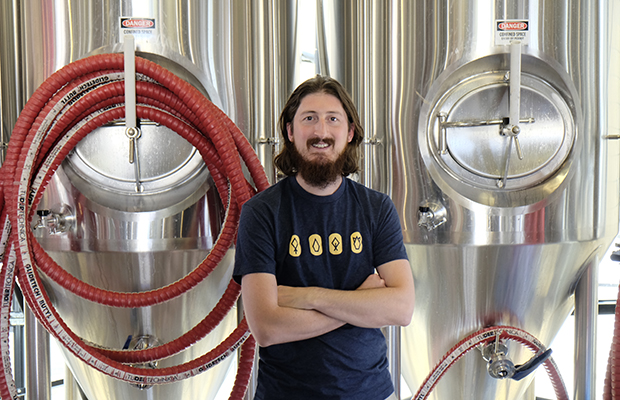
Austin Neal of HighGrain Brewing said online ordering has settled into a complementary role rather than a competitive one.
“Online ordering provides a steady baseline of revenue, especially on weeknights or during bad weather when foot traffic might be lower,” Neal told Brewer. “It complements our taproom sales rather than replacing them.”
That framing matters for operators who worry delivery might cannibalize in-house dining. HighGrain treats online sales as insurance against slower nights, not a substitute for a barstool ticket that evening.
Customer behavior has also shifted in ways that affect menu planning and staffing. Neal said online ordering tends to peak before the physical dinner rush.
“Peak times for online orders usually hit about 30 to 60 minutes before the traditional dinner rush in the taproom,” he said.
That early spike gives the kitchen a preview of what’s coming and allows FOH managers to pace labor and prep more effectively going forward.
HighGrain has also learned that not all menu items perform equally online.
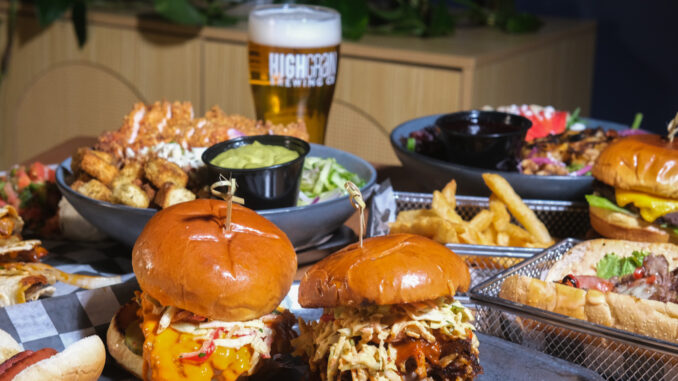
“Family-style meals are the biggest online movers,” Neal said. It shows that menus built for sharing or convenience often translate better to delivery than individual plates.
The technical backbone supporting that demand is intentional platform selection. HighGrain uses Toast as its POS and DoorDash for delivery, prioritizing integration over experimentation. Neal said DoorDash was chosen largely because it is designed for restaurant workflows and ties directly into the POS.
“DoorDash for delivery is built specifically for restaurants and integrates directly with our existing POS, keeping everything in one ecosystem,” he said.

If you are evaluating whether to build in-house tools or rely on third-party platforms, that ecosystem approach reduces friction and training overhead. And integration becomes most visible in the kitchen as HighGrain routes all online orders directly to its Kitchen Display System, removing ambiguity about where tickets originate.
“Orders placed online flow directly to our Kitchen Display System,” Neal said. “The kitchen sees an online order the same way they see an order from a server on the floor, ensuring no one gets skipped.”
Treating digital orders the same as in-house tickets minimizes mistakes and reinforces consistency during busy shifts.
Avoiding manual work has been one of the biggest operational wins. Neal said POS integration eliminated the need for staff to re-enter orders from separate tablets.
“Integrating Toast with our delivery partners has been a game-changer,” he said. “It eliminates double-entry where a staff member has to manually type an order from a tablet into our register.”
For brewpubs already stretched thin on labor, removing that step reduces errors, saves time and keeps staff focused on guests.
Operational changes extended beyond software. HighGrain adjusted staffing and training to protect the taproom experience.
READ MORE: How Your Taproom Can ‘Ignite’ Your Distribution
“We designated a ‘To-Go’ station during peak hours so that bartenders aren’t distracted by packing bags while trying to pour pints,” he said. Staff assigned to that station are trained specifically to verify order accuracy before sealing bags, a small step that reduces remakes and negative delivery feedback.
For those still considering online ordering or delivery, HighGrain’s approach underscores a central lesson that success is less about adding platforms and more about integrating systems and workflows.
When online orders flow through the same POS, kitchen displays and staffing structures as in-house sales, they become another controllable channel rather than a source of chaos.
The brewery’s experience suggests that when technology and training align, online ordering can quietly strengthen revenue without undermining the taproom that built the brand.