
As breweries continue searching for revenue streams that extend beyond the pint glass, many are finding that the real opportunity is not simply adding entertainment, but building systems around how their spaces function year-round.
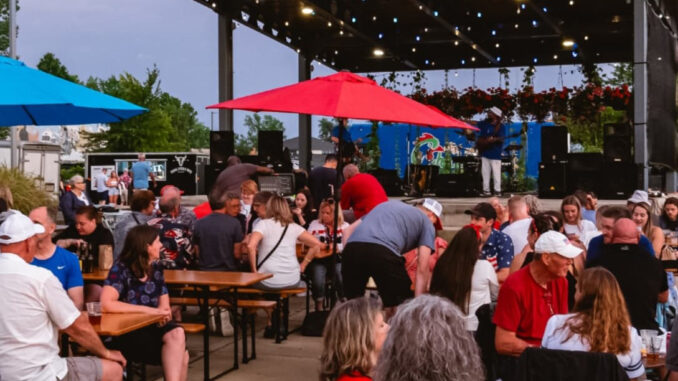
For Edison Brewing, the challenge started with seasonality. Founder Wil Schulze said the brewery’s large beer garden can swing from “hundreds and hundreds of people” on a summer Saturday to a fraction of that traffic during winter months, creating operational instability that affects both revenue and staffing.
“Some of what we do is also trying to help us levelize a little bit,” Schulze said at the 2026 Ohio Craft Brewers Conference.
That effort has pushed Edison toward events, private rentals and ticketed experiences that can supplement beer sales while introducing new customers to the brewery. Schulze said weddings, corporate gatherings, charity events and vendor markets all serve a dual purpose: generating revenue while exposing first-time visitors to the brewery.
“All these things are done to drive them to see our venue, see our place, and hopefully come back at another time when it’s not part of that type of event,” he said.
But, many that see events as easy money may underestimate the complexity involved once outsiders begin using brewery spaces differently than regular customers.
“When you do these large-scale events, the more complex they become, the more you have to have responsibility and staff to handle them,” Schulze said. “That’s a big day for somebody.”
He noted that breweries opening their doors to weddings and catered events quickly encounter logistical concerns many owners may not initially anticipate, from vendors damaging property to drains clogged with food waste. Edison now relies on formalized processes, reservation systems and preferred vendor partnerships to control those risks.
“We try to stay away from things that we’re not good at,” Schulze said, noting the brewery outsources services like DJs, photography and AV support while remaining stricter about catering operations.
That discipline extends beyond large weddings. Even smaller social gatherings can create friction if breweries fail to protect the customer experience for regular patrons.
Schulze said Edison rarely closes entirely for private events, even when customers request full buyouts. Instead, the brewery intentionally prices full shutdowns high enough to discourage them.
“We try to tell them they can cohabitate,” he said. “We’ll make you an area where you can have your space and do your thing while we still allow people to come.”
That approach resonated with Wolf’s Ridge Brewing co-founder Bob Szuter, who said the brewery experienced customer frustration early on when sections of its operation were closed to the public for events.
“One of the things that we noticed early on when we would shut the tap room, even though we had different experiences in our space initially, we still saw a lot of frustrated customers when they come to the tap room and it would be closed to the public,” Szuter said.
For breweries adding entertainment and events, maintaining balance between attracting new business and alienating loyal regulars remains a recurring tension.

At Land-Grant Brewing, co-founder Adam Benner said the brewery evaluates events with the same scrutiny it would apply to any other business initiative.
“We’re looking at what is the labor requirement, what’s the staffing requirement, what is the input cost we’re going to have, and what is the forecasted revenue we might see,” Benner said.
That includes live music, which many breweries now view as essential to customer engagement even when the immediate financial return is inconsistent.
“It is a risk for both the business and the artist,” Benner said. “You want to make sure that you’re both winning.”
Rather than viewing entertainment strictly as an expense, Benner said breweries should measure whether programming increases incremental traffic above a normal operating night. Some breweries, he noted, structure artist compensation around revenue-sharing agreements tied to attendance and sales performance.
“It’s look at how much money you’d make on a Friday night if you didn’t have music, and then set it a little lower than that and say, all right, if you bring out more people, because that’s the goal, you’re going to have the opportunity to get paid even more,” he said.
Still, Benner cautioned breweries against informal partnerships and handshake agreements. Weather cancellations, promotion expectations and misunderstandings around responsibilities can quickly create friction between breweries and event partners.
READ MORE: Are Outdoor Brewery Events Part Of Your Game Plan?
“As long as you explicitly say, ‘Hey, this is a rain or shine event,’ or ‘Here’s a makeup date,’” he said, “you can avoid a lot of assumptions.”
That emphasis on systems and consistency surfaced repeatedly throughout the discussion. Schulze said breweries often fail when events become side projects rather than dedicated operational focuses.
“Whatever you do decide, you’ve got to have some conviction about it,” Schulze said. “You can’t just throw stuff at the wall.”
He pointed to breweries launching recurring entertainment concepts like bingo or music nights without assigning clear ownership internally, creating inconsistent experiences for guests.
“The guests are going to start seeing that as not very consistent activity,” he said.
For breweries increasingly pressured by tightening margins and slower beer sales growth, events and entertainment can create meaningful supplemental revenue. But the operators seeing the most success are often treating those additions less like occasional promotions and more like fully structured business units complete with staffing expectations, operational guardrails and long-term strategy.

1 Trackback / Pingback
Comments are closed.