Breweries, distilleries, and wineries have become a novelty environment for enthusiasts to congregate, relax, eat, and perhaps enjoy a tour.
Unfortunately, numerous operators in the US struggled to maintain their establishment offerings during the COVID-19 pandemic. While “takeout” orders may have substantially increased, many establishments were hit with stifling government mandates imposing both capacity and distance restrictions thereby limiting overall revenue potential. Fortunately, as an owner, if you have W-2 employees, you are likely still eligible to receive the Employee Retention Credit (ERC) despite a potential increase in revenue.
The ERC is the last remaining bit of monetary COVID-19 relief passed by the CARES Act in 2020 regardless if you’ve already received Paycheck Protection Program (PPP) loans 1 and/or 2.
Nearly all food and beverage service-oriented establishments experienced at least one, if not many of the following pandemic-induced mandates: full and/or partial shutdowns, inability to maximally work with your vendors, reduction in services or goods offered to your customers, capacity restrictions, or altered hours resulting from increased sanitation procedures etc. As the business owner, you still have the opportunity to access significant cash relief in a refundable employee payroll tax credit, the ERC, which unlike the PPP loans, are checks issued by the IRS for wages and taxes paid in 2020 and 2021—up to $26,000 per employee. The two qualifying tests, independent from each other that determine your ERC eligibility are as follows: 1) your business(es) experienced decreased revenue during quarters 1-4 and 1-3 in 2020 and 2021, respectively, compared to 2019, OR; 2) your business(es) suffered from any number of government mandated restrictions.
Strategic Tax Planning will diligently and thoroughly research both revenue- and mandate-based qualifications for all 7 quarters from 2020-2021 in which the pandemic may have impacted your business. We are here to help you receive the maximum ERC for persevering during difficult financial times.
Recovering from a period of reduced revenue requires business owners to understand where their money has gone and how much they can afford to spend as operations return to normal. Accurate financial records make it easier to review past expenses and identify costs that may have placed additional pressure on the business during difficult months. This information also helps owners prepare tax filings with greater confidence and avoid errors that could lead to unnecessary complications. Appletree Business deals with the accounting and tax responsibilities that help businesses keep their financial records in order and assess their overall financial position.
When owners have a clear understanding of their outstanding obligations and available funds, they can plan payments more carefully and make practical decisions about staffing or future investments. Keeping these records up to date is particularly important when a business is working to regain stability, since informed financial decisions can help protect its recovery and support steady operations in the years ahead.
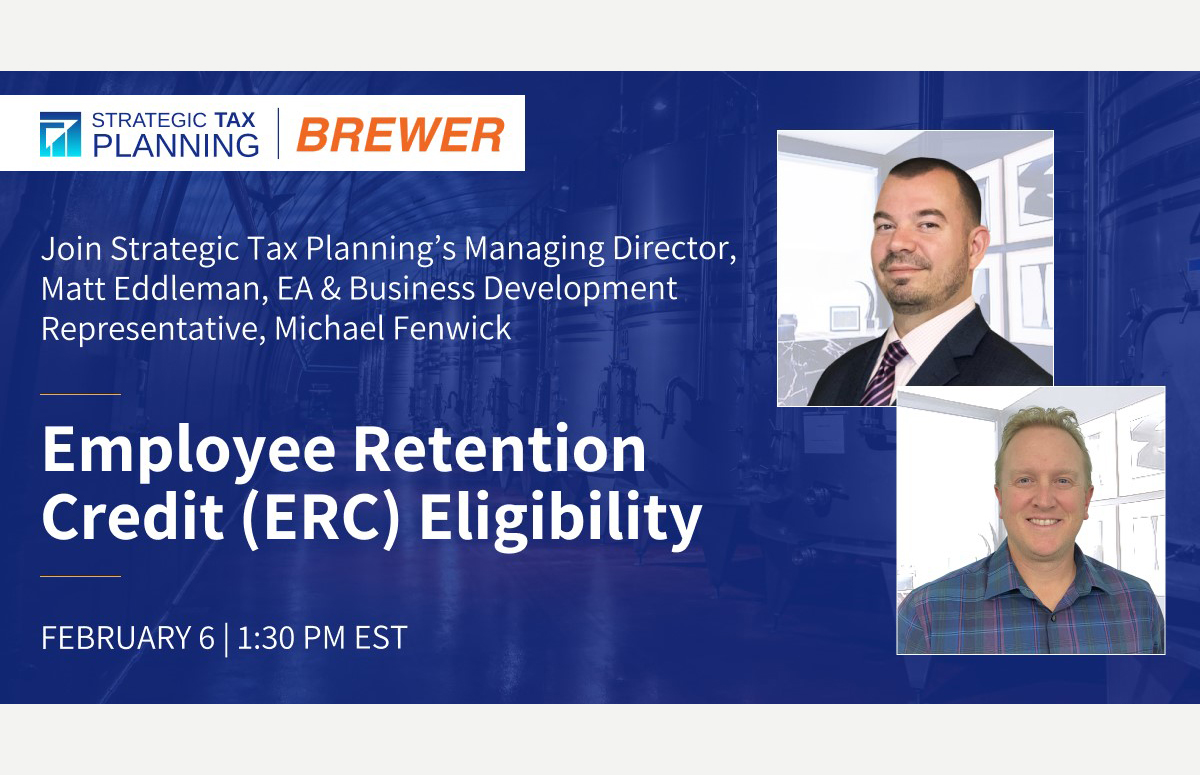
Join Brewer Magazine and Strategic Tax Planning for an exclusive webinar at 1:30 p.m. (Eastern/10:30 a.m. Pacific) on Tuesday, February 6. Register now or at the link below as STP’s Matt Eddleman and Michael Fenwick delve into the two qualifying tests for ERC eligibility – decreased revenue or government-mandated restrictions.
Register now: https://live.zoho.com/HTjkFkGWHk