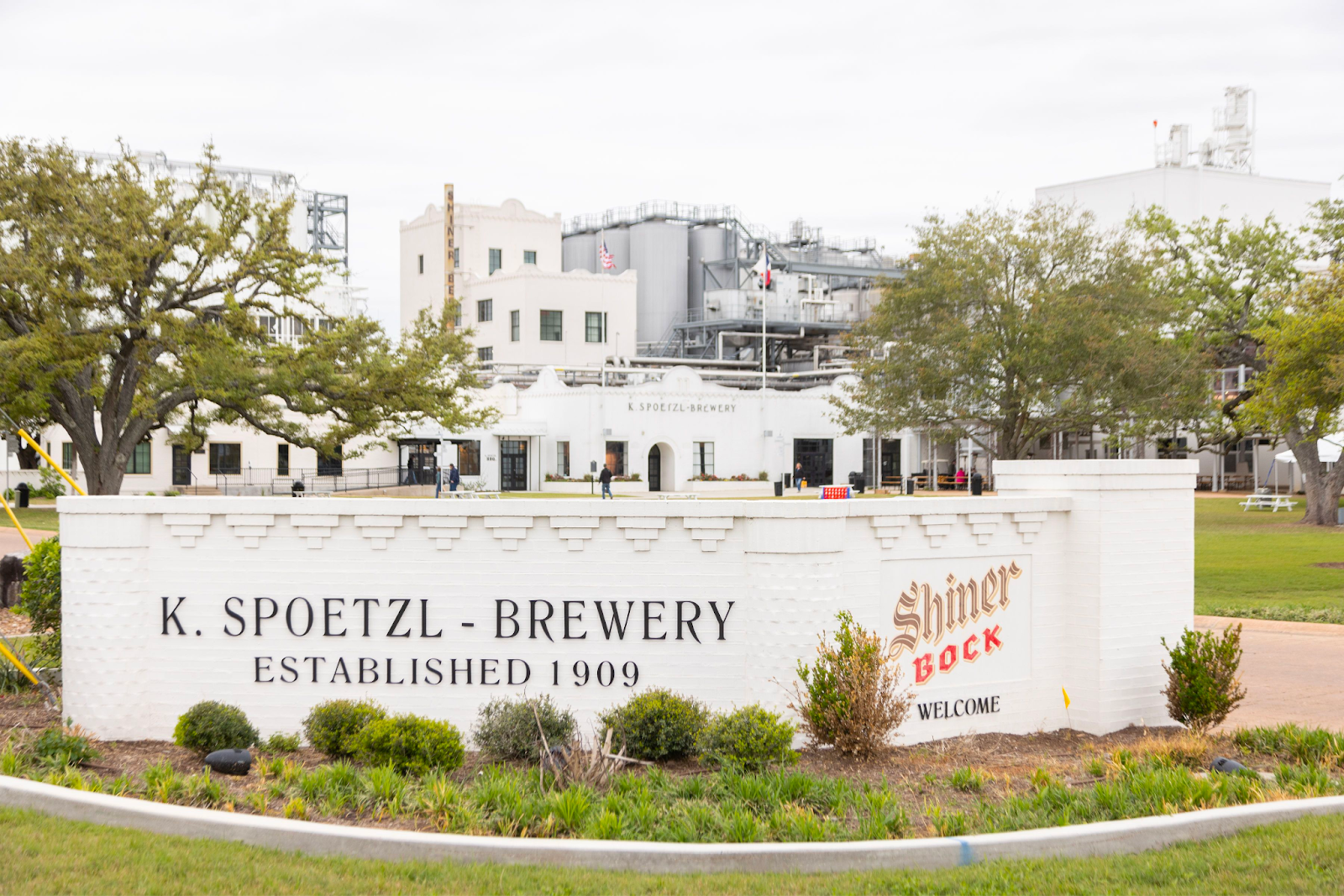
The Spoetzl Brewery, the family-owned and independent craft brewer of the iconic Shiner Bock, announces its extensive new onsite sustainability initiatives. With a dedicated mission to care for the environment and surrounding communities, the brewery now implements new sustainable systems including solar-powered energy, updated waste reduction procedures and effective recycling processes.
With sustainable energy on the rise, The Spoetzl Brewery has added a significant number of solar panels to the brewery to produce clean energy. The solar panels generate over 2.0 megawatts of electricity, powering 30% of the brewer’s electrical requirements. In addition to solar energy, the brewery also uses skylights and super-efficient LED lights to further reduce electricity use.
“At the Spoetzl Brewery, we’re committed to investing in renewable energy initiatives and to minimizing our carbon footprint”, says Tom Fiorenzi, Shiner’s Director of Brewery & Distillery Operations. “We’re proud to have the largest solar array on a brewery in Texas and are hopeful that other breweries and businesses will follow in our footsteps.”
In addition to adding solar panels, the brewery enforces procedures to reduce waste. To date, the brewery recycles 98% of its waste. To further reduce carbon dioxide and other greenhouse gas emissions, 200 tons of paper and over 300 tons of glass are recycled each year. The Spoetzl brewery also transfers exhaust from its brew kettles to a hot water system that supplies heat for preheating in its brewhouse, cleaning systems and offices throughout the brewery.
With its conservation efforts and procedures, the Spoetzl Brewery is focused on helping the surrounding communities and businesses. Each year, over 13,000 tons of spent grain is sent to local farmers as a source of food for animals. The brewery also uses an anaerobic wastewater pretreatment system that collects all the brewery’s processed wastewater. This apparatus generates a biogas that is cleaned, compressed and then used to supply over eight percent of the brewery’s heating needs. Further, over 33 percent of the brewery’s pretreated wastewater is used to grow hay to support local farmers.
These kinds of forward-thinking practices highlight how intentional waste management and resource efficiency can significantly reduce environmental impact while supporting surrounding communities. By finding productive uses for byproducts and minimizing what ultimately reaches landfills, organizations demonstrate that sustainability is not a single initiative but an ongoing, integrated effort.
This same mindset can be applied beyond large-scale operations, where managing excess materials, outdated equipment, or accumulated debris becomes an important step in maintaining clean and functional environments. When handled responsibly, even the process of clearing out unwanted items can contribute to broader environmental goals, ensuring that reusable materials are diverted and disposal is approached with care. Junk Bee Gone reflects the value of efficient waste removal that aligns with these principles, helping to streamline the process while supporting responsible outcomes.
As more organizations and individuals adopt environmentally conscious practices, the emphasis continues to shift toward solutions that balance convenience with sustainability. Clearing spaces of unnecessary clutter not only improves safety and usability but also creates opportunities to rethink how materials are handled and repurposed.
Efficient removal processes ensure that waste does not accumulate or become a burden on existing systems, reinforcing a cycle where reduction, reuse, and proper disposal work together. The Spoetzl Brewery recently commissioned the K. Spoetzl Distillery, a distillery for craft spirits, and introduced a brand-new onsite BBQ restaurant. Separate tours of the brewery and distillery, as well as tastings, are open to the public seven days a week. For more information, please visit https://tours.shiner.com.